

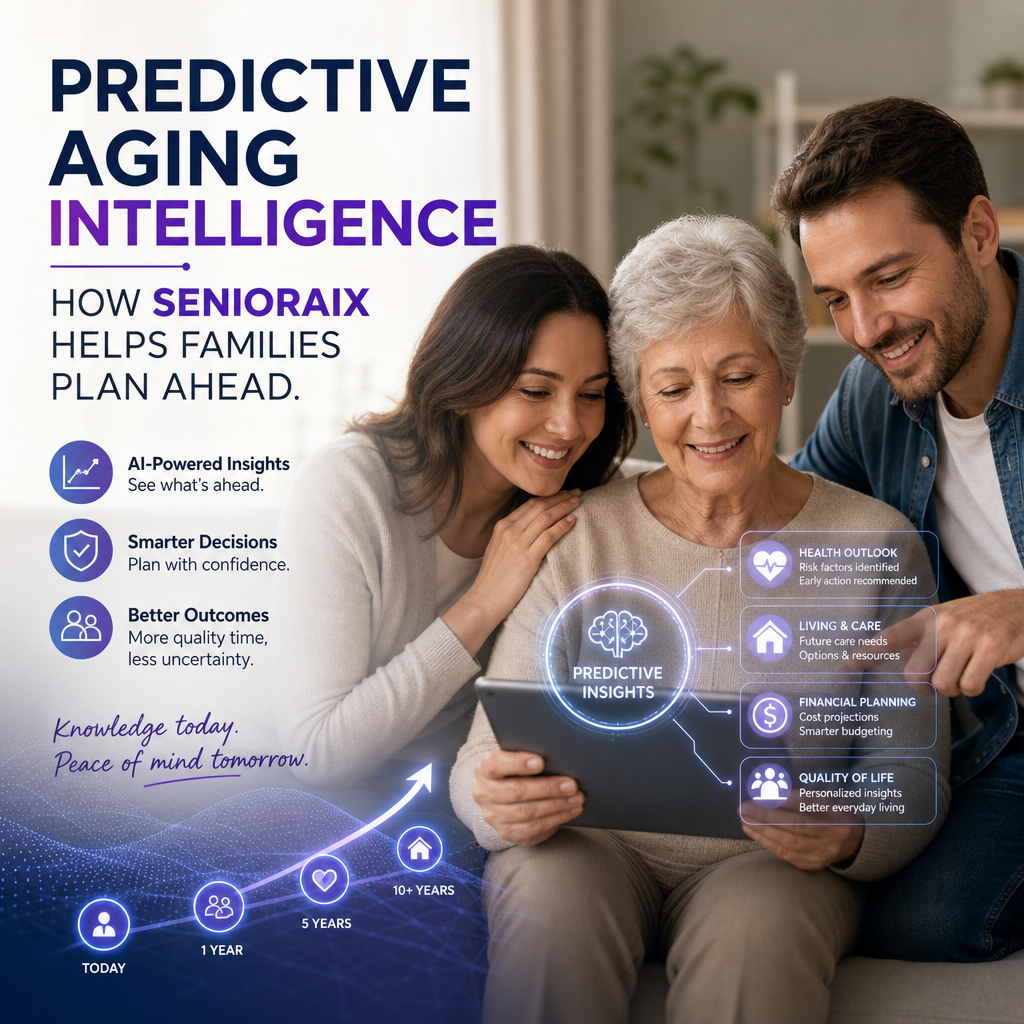
Predictive Aging Intelligence: How SeniorAIx Helps Families Plan Ahead
Predictive Aging Intelligence: Why Planning Ahead Matters
Aging rarely follows a straight line. One year, a parent is active and independent. The next, small changes in mobility, memory, or daily routines can start to affect safety and quality of life. For many families, the hardest part is not responding to a crisis—it is knowing how to prepare before one happens.
That is where Predictive Aging Intelligence becomes valuable. Instead of waiting for clear decline or urgent health events, families can use data-driven insights to understand patterns, anticipate needs, and make more confident decisions. SeniorAIx is designed to support exactly that kind of future-focused planning.

What Is Predictive Aging Intelligence?
Predictive Aging Intelligence uses health trends, behavioral patterns, and risk indicators to help forecast how an older adult’s needs may change over time. Rather than replacing human judgment, it gives families and caregivers a clearer picture of what may be ahead.

This can include insights related to:

- Mobility changes
- Fall risk
- Cognitive decline patterns
- Medication management challenges
- Social isolation
- Shifts in care needs at home
For families, this means less guessing and more informed action.
How SeniorAIx Helps Families See the Bigger Picture
SeniorAIx brings together aging-related insights in a way that is practical and understandable. Many families struggle because important warning signs are easy to miss when viewed one by one. A missed appointment, slower walking speed, confusion about medications, or changes in sleep may seem minor in isolation. But together, they can reveal a larger trend.

SeniorAIx helps families connect those dots.

By identifying patterns early, the platform can support better conversations around:
- When to increase in-home support
- Whether a living environment is still safe
- How to prepare financially for future care
- When to involve medical professionals more proactively
- How to reduce avoidable emergencies
This shift from reactive to proactive care can make a major difference.
The Emotional Benefit of Planning Early
Future planning is not only about logistics. It is also about reducing fear.
Families often feel overwhelmed when they are forced to make major decisions under pressure. Hospital discharges, unexpected falls, or sudden cognitive decline can create urgency, confusion, and family conflict. With Predictive Aging Intelligence, planning starts earlier, when there is still time to explore options calmly.
That can lead to:
- More respectful conversations with aging loved ones
- Better alignment among siblings and caregivers
- Less guilt around difficult care decisions
- Greater confidence in next steps
When families have a clearer view of possible outcomes, they are more likely to feel prepared instead of panicked.
Key Ways SeniorAIx Supports Long-Term Decisions
1. Identifying Risk Before It Becomes a Crisis
One of the biggest advantages of SeniorAIx is early awareness. If the system highlights rising risk in mobility, cognition, or independence, families can respond while solutions are still manageable.
That might mean installing safety features, adjusting routines, or scheduling evaluations before a serious incident occurs.
2. Improving Care Planning
Care planning often becomes fragmented. One family member handles appointments, another manages finances, and someone else notices emotional changes. SeniorAIx helps organize the bigger story, making it easier to understand what level of support may be needed next.
This can improve coordination between:
- Family caregivers
- Physicians
- Home care providers
- Senior living advisors
- Financial planners
3. Supporting Financial Readiness
Long-term care can be expensive, and many families underestimate future costs. Predictive insight gives families more time to review budgets, insurance options, housing plans, and support services.
Instead of scrambling after a sudden event, they can build a smarter financial strategy based on likely needs.
Why This Matters for Aging in Place
Many older adults want to remain at home as long as possible. That goal is often realistic—but only when families understand what support will be required to make it safe and sustainable.
SeniorAIx can help families evaluate whether aging in place remains the best option over time. It can also highlight when additional help may be needed, such as:
- Meal assistance
- Medication reminders
- Transportation support
- Fall prevention tools
- Companion care
- Memory care planning
This creates a more balanced approach: honoring independence while preparing responsibly.
Human Decisions, Backed by Better Insight
Technology should never remove empathy from elder care. The purpose of Predictive Aging Intelligence is not to make decisions for families, but to help them make better ones.
SeniorAIx offers a practical advantage in a deeply personal stage of life. It helps families move beyond assumptions and toward clearer planning, earlier intervention, and more thoughtful care choices.
In many cases, the future is not entirely predictable. But it can become more understandable.
Looking Ahead with More Confidence
Planning for aging is one of the most important responsibilities many families will face. The earlier that planning begins, the more choices remain available. SeniorAIx gives families a way to prepare with insight instead of waiting for uncertainty to become crisis.
As the needs of older adults continue to evolve, Predictive Aging Intelligence can play an important role in helping families stay one step ahead—protecting independence, improving care, and creating peace of mind for the road ahead.
