
How AI Can Help Seniors Stay Safe at Home While Maintaining Independence
AI and smart-home technologies can help older adults remain independent at home by supporting safety monitoring, daily tasks, reminders, and caregiver communication. These tools should be selected according to individual needs, with attention to accessibility, reliability, affordability, consent, and privacy.
Technology is intended to supplement—not replace—human care, emergency planning, social connection, and professional support. The article emphasizes involving seniors in decisions and preserving their dignity, personal choice, and independence.
For many older adults, staying at home is about more than comfort. It means preserving independence, maintaining familiar routines, and remaining connected to the people and places they love. However, everyday tasks can become more challenging with age, leaving families concerned about safety and caregiving responsibilities.
Artificial intelligence (AI) is creating new opportunities to support seniors at home without taking away their independence. When used responsibly, these technologies can help families stay informed, simplify daily activities, and make home environments more supportive.

1. Smarter Home Safety

AI-enabled home systems can help monitor certain environmental conditions, such as smoke alarms, unusual temperature changes, or potential water leaks, when connected to compatible sensors. Some systems can also identify unusual activity patterns and notify a designated caregiver.

These tools are not a substitute for emergency services or direct human care. Their value lies in providing an additional layer of awareness that may help families respond more quickly to potential problems.
2. Supporting Independent Daily

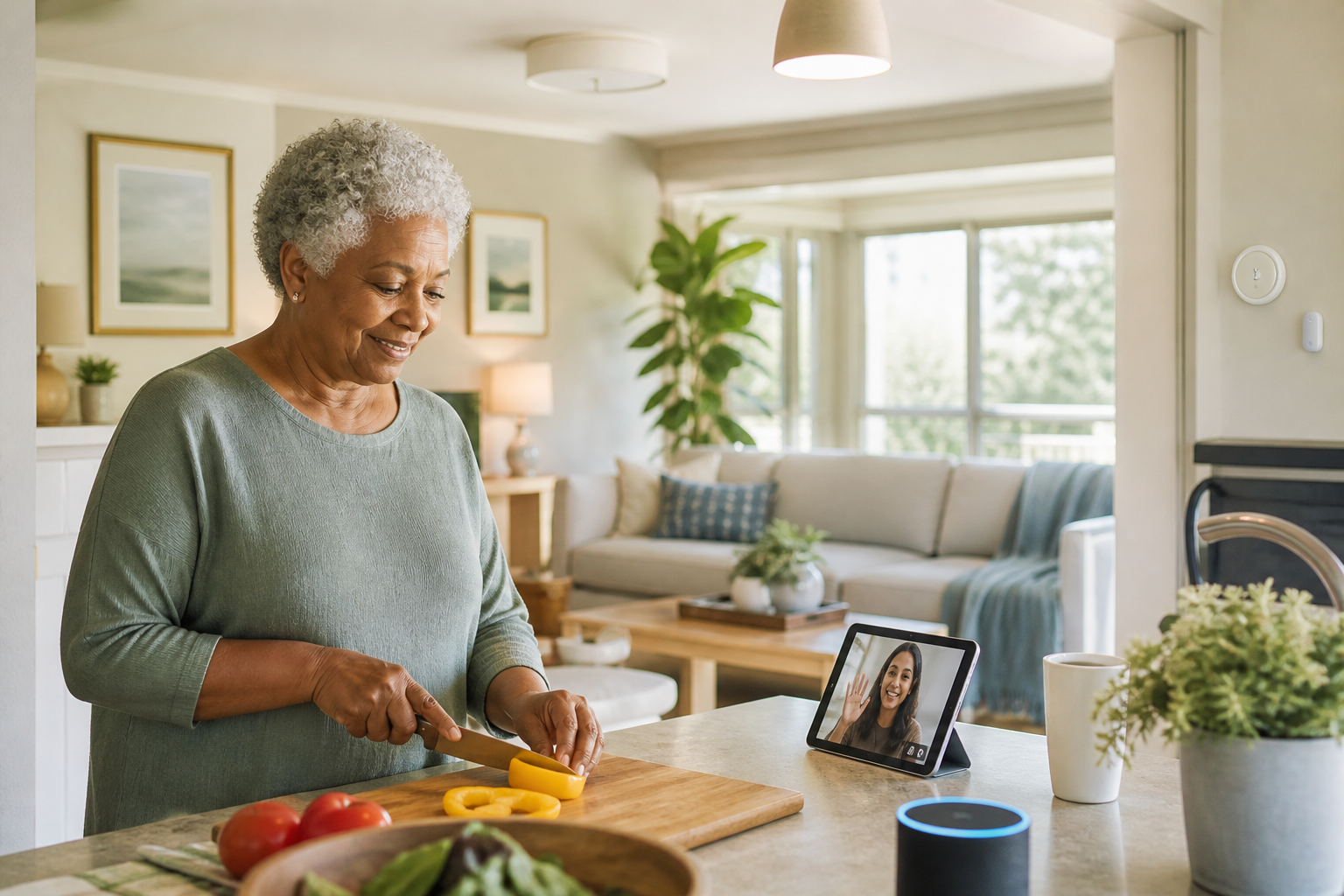
LivingSimple daily activities can become easier with voice assistants and connected home devices. Seniors may use compatible systems to control lights, adjust thermostats, operate certain appliances, or receive reminders.

These features can reduce the need to perform some tasks manually and make the home more convenient. The best solutions are those that are easy to use and adapted to each person’s abilities and preferences.
3. Helping Families and Caregivers Stay Connected
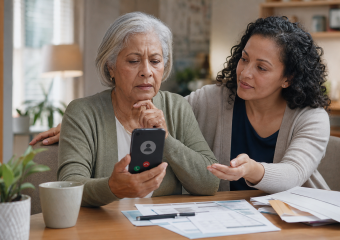
Family caregivers often balance work, family responsibilities, and concern for an older loved one. With appropriate permission, digital tools can help coordinate visits, organize care schedules, and share selected updates among family members.
AI can also help organize information and routine communications, giving caregivers more time to focus on meaningful conversations and personal support.
Importantly, seniors should understand what information is collected, who can access it, and how it will be used. Consent and privacy should remain central to every caregiving arrangement.
4. Choosing Technology That Respects Privacy
Not every senior needs a sophisticated smart-home system. Some people may benefit from a simple voice assistant or reminder tool, while others may need specialized sensors or professionally installed safety equipment.
Before introducing a new technology, families should consider ease of use, affordability, accessibility, reliability, and privacy. Seniors should be involved in the decision rather than having technology imposed on them.
AI systems can make mistakes, and internet-connected devices may experience outages. Essential safety measures should therefore remain available even when technology is unavailable.
5. Keeping Human Care at the CenterTechnology works best when it supports relationships rather than replacing them. Regular visits, social interaction, professional caregiving when needed, and clear emergency plans remain essential parts of senior well-being.
AI can assist with selected tasks, but it cannot replace the empathy, judgment, and personal attention that human caregivers provide.
The Future of Aging in Place
As more families explore ways to support older loved ones, responsible AI and smart-home technology may offer practical ways to improve convenience, coordination, and awareness of potential risks.
The goal is not to monitor every moment of a senior’s life. It is to offer useful support while protecting dignity, personal choice, and independence.
At SeniorAIx, the focus is on exploring how technology can support seniors, families, and care providers through practical, human-centered solutions. Learn more at https://senioraix.com.
Conclusion: The most effective approach combines appropriate technology, informed family support, privacy protection, and human care—helping older adults remain as safe and independent as possible in the place they call home.