
AI-Powered Senior Wellness: A Complete Guide to Healthy Aging
The Ultimate Guide to AI-Powered Senior Wellness
Artificial intelligence is changing how older adults manage everyday health and well-being. From wearable devices that track activity to virtual assistants that offer reminders, AI-powered senior wellness tools can support independence, help families stay informed, and make care more responsive.
These tools are not a substitute for doctors, caregivers, or human connection. Their greatest value comes when they are easy to use, chosen with the older adult’s consent, and included as part of a broader care plan.

What Is AI-Powered Senior Wellness?
AI-powered senior wellness uses technology to identify patterns, provide helpful prompts, and tailor support to an individual’s needs. It may combine information from wearables, smartphones, home sensors, or health records to help users and care teams make informed decisions.

For example, a system might notice changes in sleep or daily activity and prompt someone to check in with their care provider. The technology can offer useful signals, but it cannot diagnose a condition or understand someone’s full situation without human judgment.

How AI Can Support Older Adults
Health Monitoring and Early Awareness
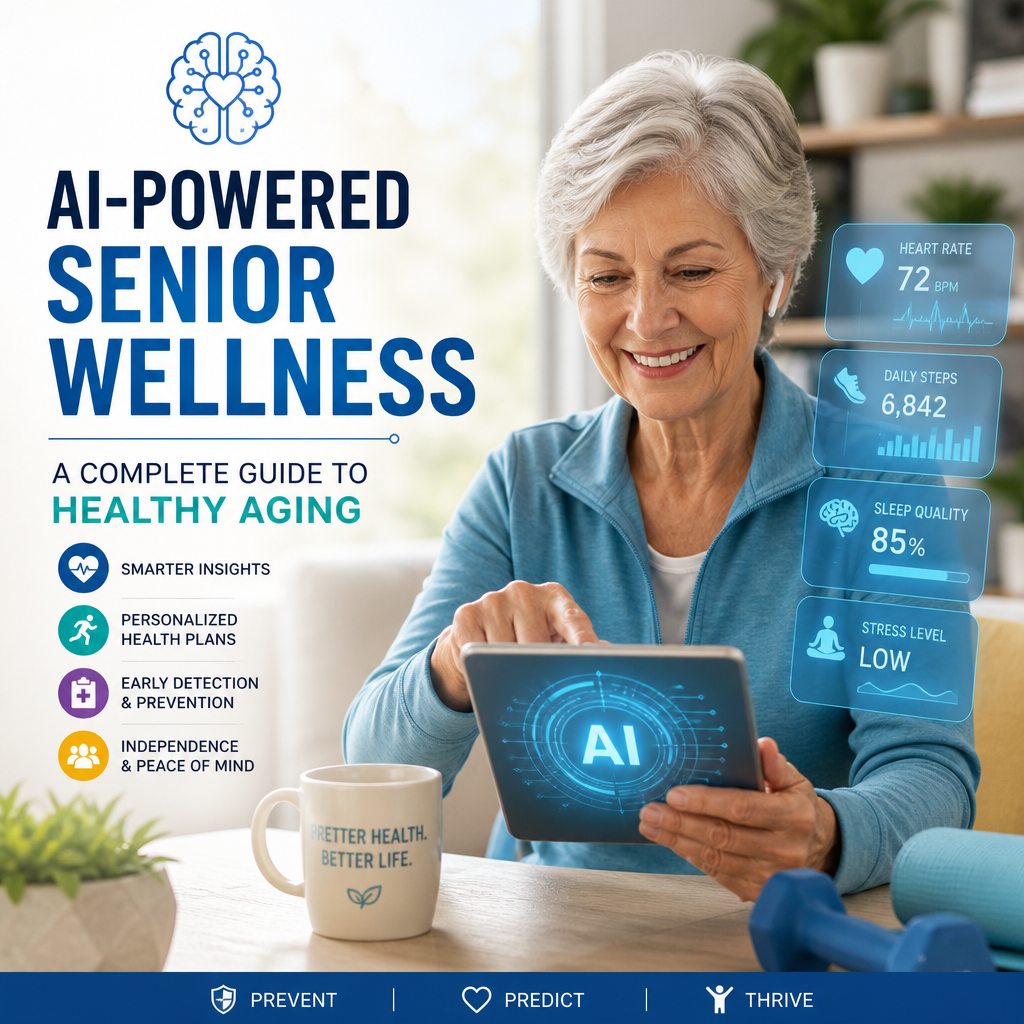
Smartwatches and other wearable devices can track measures such as movement, heart rate, and sleep. Some tools can also detect a possible fall or send an alert when a user needs assistance.
AI may help organize these readings and highlight changes over time. This can make it easier for an older adult to discuss concerns with a clinician. Alerts should be treated as prompts to investigate—not as medical conclusions.

Medication and Appointment Reminders
Voice assistants and phone apps can provide reminders to take medication, attend appointments, drink water, or complete daily routines. These features can be especially useful for people managing several schedules.

A reminder system should be configured around the user’s preferences. Clear language, adjustable alerts, and a simple way to confirm or dismiss a prompt help prevent technology from becoming another source of stress.
Safer, More Accessible Homes
Connected devices can support everyday comfort and safety. Examples include voice-controlled lights, smart doorbells, and sensors that notify a chosen contact if an unusual event occurs.
AI-enabled home systems may help detect changes in routines, such as less movement than usual. However, constant monitoring can feel intrusive. Older adults should understand what is being collected, who can see it, and how to turn the system off.
Social and Cognitive Engagement
Some digital tools provide games, conversation, music, or personalized activity suggestions. They can help make technology more engaging, especially when interfaces are designed for different levels of vision, hearing, dexterity, and digital confidence.
AI companions may offer conversation, but they are not a replacement for friends, family, or community. Technology works best when it helps people connect with others rather than isolating them.
Choosing the Right Tools
The best solution is not necessarily the newest or most advanced. Start with a specific goal, such as making medication routines easier or improving access to family support.
Before choosing a product, consider:
- Ease of use: Is the setup manageable, and can the person use it comfortably?
- Accessibility: Are text, audio, controls, and alerts suitable for the user?
- Privacy: What information is collected, stored, and shared?
- Reliability: What happens if the internet, battery, or device stops working?
- Cost: Are there subscription fees, and will insurance or a care program cover them?
- Support: Is there a person or service available to help with setup and troubleshooting?
Whenever possible, involve the older adult in comparing options. Their preferences and comfort should guide decisions.
Privacy, Consent, and Safety
Wellness data can be sensitive. Read privacy settings and product terms before connecting devices or inviting family members and care providers to view information. Share only what is needed, and review access periodically.
It is also important to consider the limits of AI. Devices can make errors, miss important changes, or produce misleading suggestions. Keep a way to contact a real person, and follow professional medical advice rather than relying on an app for urgent or clinical decisions.
Getting Started
Introduce one tool at a time and focus on a practical benefit. Set it up together, test alerts, and agree on who will receive notifications. Revisit the arrangement after a few weeks: Is the tool helpful? Does it feel comfortable? Should any settings change?
AI-powered senior wellness is most effective when it supports an older adult’s independence, dignity, and relationships. With thoughtful choices and clear boundaries, technology can make daily routines easier while keeping people—not algorithms—at the center of care.