

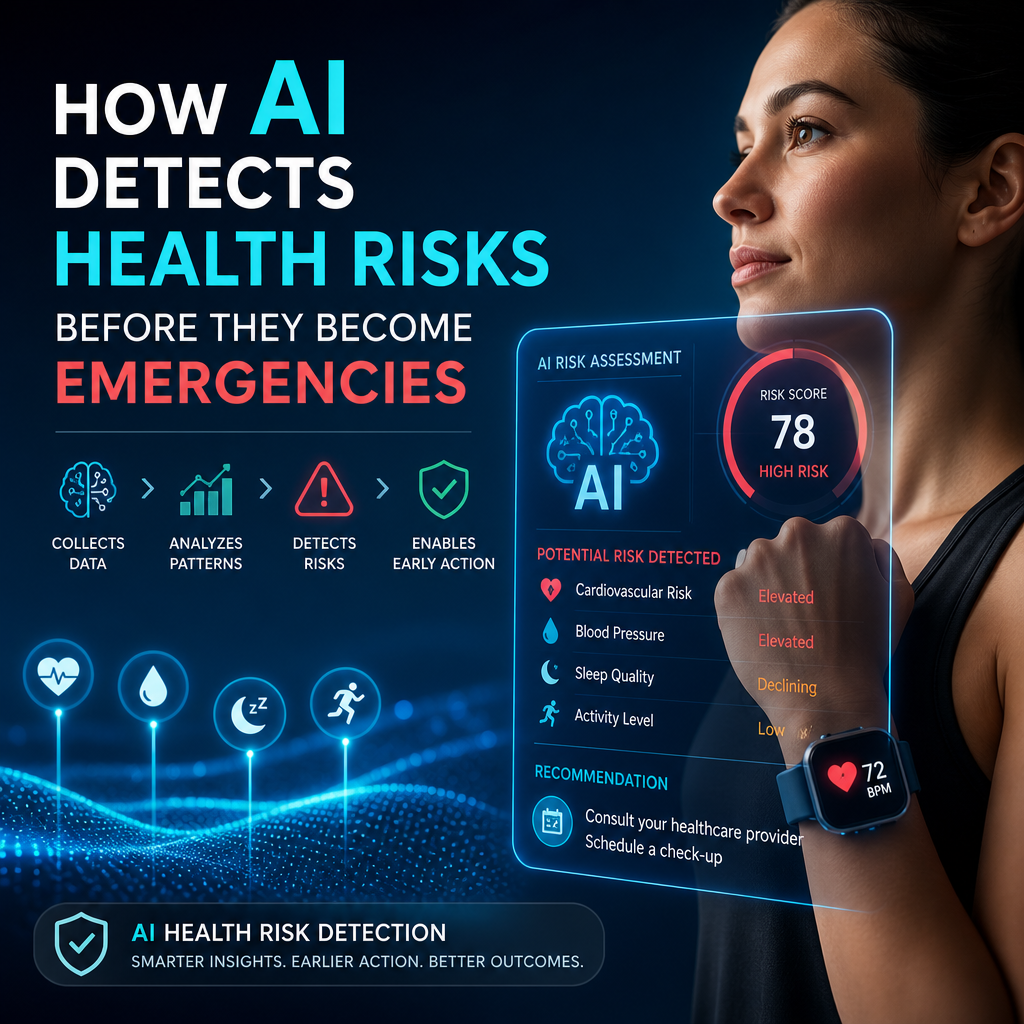
How AI Detects Health Risks Before They Become Emergencies
How AI Can Help Detect Health Risks Before They Become Emergencies
Many serious health problems develop gradually. High blood pressure, heart disease, diabetes, and certain infections may cause few noticeable symptoms at first. By the time someone feels seriously unwell, they may need urgent treatment.
Artificial intelligence (AI) could help spot warning signs earlier. By analyzing health information over time, AI tools can identify patterns that might otherwise go unnoticed and prompt people or clinicians to take a closer look. These systems are not a replacement for medical care, but they may support earlier, more informed decisions.

Finding Patterns in Health Data
AI can process large amounts of information quickly, including medical records, laboratory results, imaging, and data from wearable devices. It can look for combinations of signals associated with a higher risk of illness.

For example, a system might flag a pattern involving repeated increases in blood pressure, changes in blood sugar, and missed appointments. A clinician could then review the information, ask about symptoms, and decide whether testing or follow-up is needed.

The value often lies not in one unusual measurement but in a trend. A single high reading may have many explanations. A steady change across several readings could offer a more useful reason to check in.
Supporting Earlier Detection
Chronic conditions
Conditions such as hypertension and type 2 diabetes can progress without obvious symptoms. AI tools may help identify people whose measurements or test results suggest they could benefit from additional screening.

Some tools can also help clinicians prioritize follow-up for patients who are more likely to experience complications. This may make it easier to focus limited time and resources where they are most needed.

Heart and breathing problems
Wearable devices can collect information such as heart rate, activity, and, on some devices, blood oxygen levels. AI may analyze these signals to detect changes from a person’s usual pattern.
A notification might encourage someone to contact a healthcare professional. It should not be treated as a diagnosis: devices can produce inaccurate readings, and normal readings do not rule out a serious problem.
Infections and sudden deterioration
In hospitals, AI systems may monitor vital signs and clinical records to identify patients whose condition appears to be worsening. A timely alert can prompt staff to assess the patient sooner.
In the community, similar approaches could help identify concerning patterns in symptoms or test results. However, alerts must be carefully designed so they are useful rather than overwhelming.
Benefits for Patients and Clinicians
Used responsibly, AI-supported monitoring may offer several advantages:
- Earlier attention: Subtle changes may be noticed before symptoms become severe.
- More personalized care: A person’s current readings can be compared with their own history, not only with general averages.
- Better prioritization: Clinicians may be able to identify who needs follow-up sooner.
- More informed conversations: Patients can bring organized records and trends to appointments.
AI may also help people manage health between visits. Reminders, risk summaries, and monitoring tools can encourage regular check-ups and help users recognize when a change deserves attention.
Important Limits and Risks
AI is only as reliable as the data and methods behind it. Incomplete records, inaccurate device readings, or systems trained on unrepresentative data can lead to missed risks or unnecessary alarms. A model that performs well for one group may not work as well for another.
Privacy is another concern. Health data is sensitive, so people should understand how information is collected, stored, and shared. Healthcare organizations and technology providers need strong safeguards and clear policies.
Most importantly, an AI alert is not a medical diagnosis. It may be wrong, and it cannot fully understand a person’s circumstances. A qualified professional should interpret concerning results alongside symptoms, medical history, and examination findings.
Using AI as an Early Warning System
The best role for AI is to support—not replace—human judgment. People should follow medical advice, attend recommended screenings, and seek urgent care for severe or rapidly worsening symptoms, even if an app or device does not raise an alert.
When a tool flags a possible concern, check the reading, note any symptoms, and contact a healthcare professional for guidance. When symptoms feel life-threatening, seek emergency help rather than waiting for a digital assessment.
AI can help detect health risks before they become emergencies by making important patterns easier to see. Its greatest promise is not in predicting everything, but in helping people and clinicians act sooner when a meaningful warning sign appears.
