

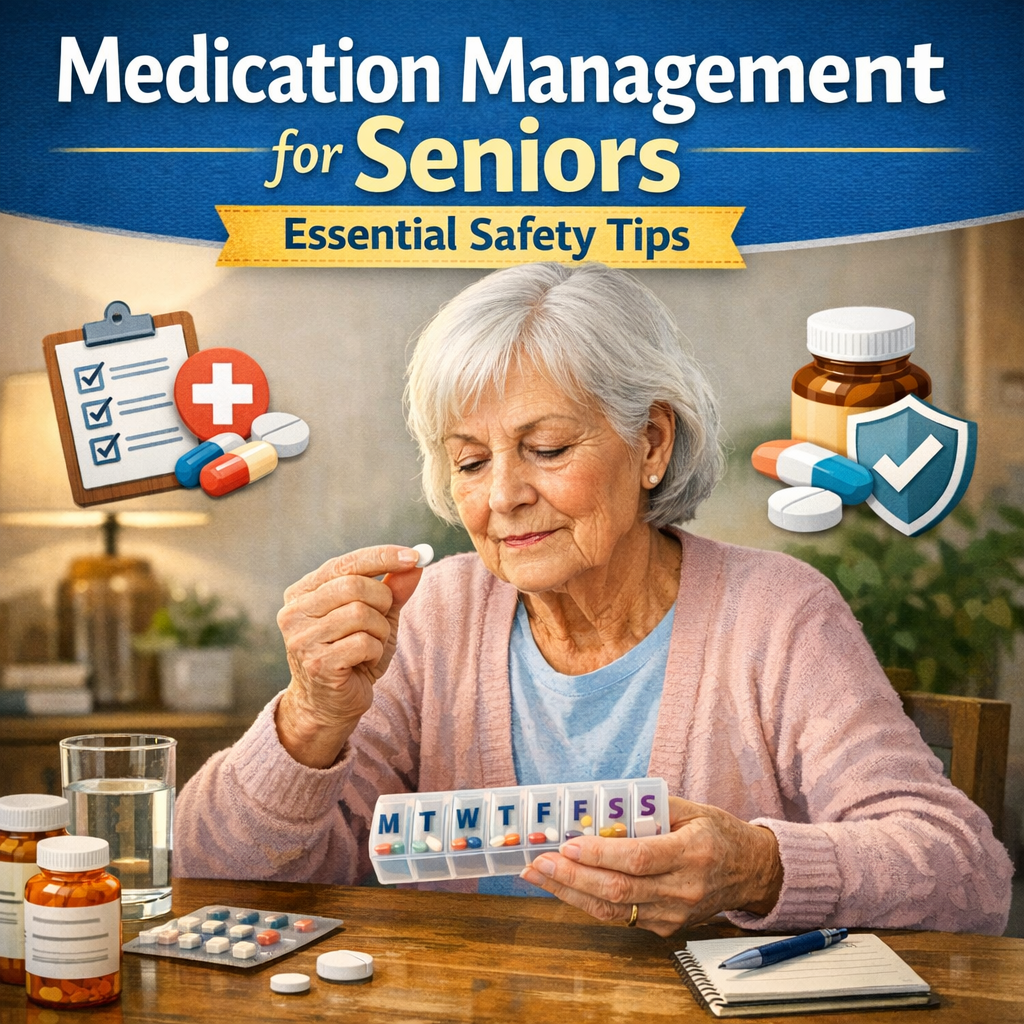
Medication Management for Seniors: Essential Safety Tips
title: “Medication Management for Seniors: Tips to Reduce Risks and Improve Daily Safety”
author: [Author Name]
date: [Date]
keywords: [“medication management”, “seniors”, “safety tips”]
Medication Management for Seniors: Tips to Reduce Risks and Improve Daily Safety
As individuals age, they often find themselves managing multiple medications, which increases the risk of misuse and adverse drug interactions. Effective medication management is crucial for seniors to maintain health and avoid complications. Here are some practical tips to help reduce risks and enhance daily safety in medication management for seniors.
Why Is Medication Management Important for Seniors?
Medication management for seniors is vital because it helps to:

- Prevent drug interactions: Many seniors take multiple medications, which can interact in ways that reduce their effectiveness or cause harmful side effects.
- Enhance effectiveness: Proper medication management ensures that drugs are taken at the right time and in the right way to maximize their effectiveness.
- Reduce the risk of overdose: Accurate dosing prevents taking too little or too much of a medication.
Tips for Managing Medications Safely
1. Use a Pill Organizer
A pill organizer can be a simple yet effective tool for seniors managing multiple medications. It helps to:

- Keep pills organized by day and time.
- Reduce the risk of missed or double doses.
2. Maintain an Up-to-Date Medication List
Seniors and their caregivers should keep a detailed list of all medications, including:

- Name of the drug.
- Dosage instructions.
- Purpose for each medication.
This list should be reviewed and updated with every change in medication and shared with every healthcare provider.
3. Set Up Reminders
Setting up reminders can help seniors remember to take their medications on time. Options include:

- Alarm clocks.
- Mobile apps.
- Reminder services that send calls or texts.
4. Regularly Review Medications with a Healthcare Provider
It’s essential for seniors to:

- Have regular consultations with their healthcare providers.
- Discuss the necessity of each medication.
- Explore potential drug interactions.
- Adjust prescriptions as needed for safety and effectiveness.
5. Understand Each Medication
Seniors should be well-informed about:
- Why they are taking each medication.
- The potential side effects.
- What to do in case they miss a dose.
6. Opt for Automatic Refills
Enrolling in automatic refill programs through a pharmacy can ensure that medication is continuously available. This prevents gaps caused by running out of medication.
7. Use One Pharmacy If Possible
Using a single pharmacy for all prescriptions can:
- Help pharmacists monitor drug interactions more effectively.
- Make managing refills simpler.
- Provide a centralized location for all medication needs.
8. Be Aware of Expiry Dates
Expired medications can be:
- Less effective.
- Potentially dangerous.
Seniors should routinely check and dispose of expired medications safely.
9. Ensure Proper Storage
Proper storage of medications helps in maintaining their efficacy. Seniors should:
- Store medications as per the guidelines.
- Keep them in a cool, dry place.
- Ensure they are out of reach of children or pets.
10. Educate On Proper Disposal
It is critical for seniors to know how to dispose of medications safely, as improper disposal can lead to:
- Environmental hazards.
- Accidental ingestion by children or animals.
Local pharmacies or health departments often offer medication take-back programs or disposal kits.
Conclusion
Effective medication management for seniors is a critical component of health care that reduces the risks associated with polypharmacy and promotes safety in daily living. By implementing these tips, seniors and their caregivers can help ensure that medications are used effectively and safely, contributing to better overall health outcomes. Remember, when in doubt, consulting with a healthcare professional is the best approach to managing your medications responsibly.
