

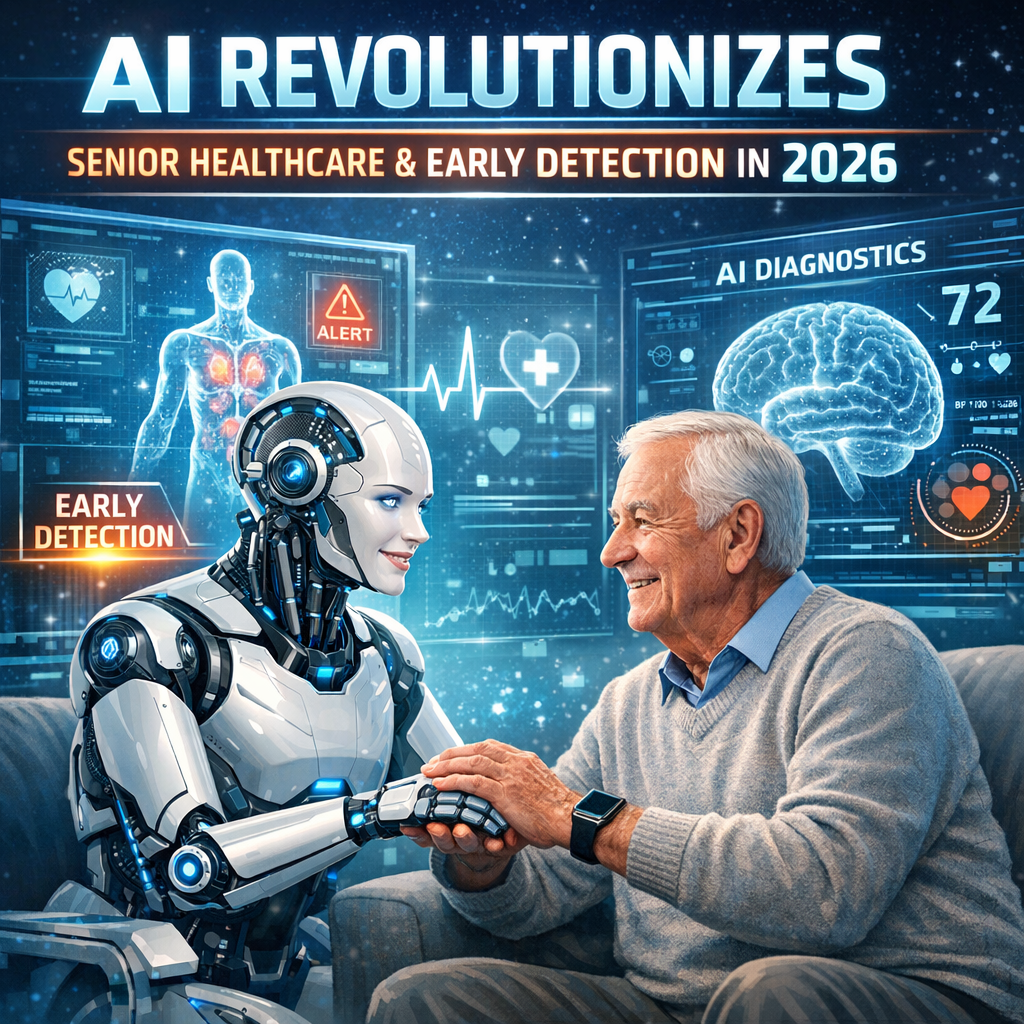
AI Revolutionizes Senior Healthcare and Early Detection in 2026
How AI Is Transforming Senior Healthcare and Early Detection in 2026
As we move further into the decade, the application of Artificial Intelligence (AI) in various sectors is becoming increasingly profound. One of the most significant impacts of AI is seen within the realm of healthcare, particularly in enhancing the care and early disease detection for seniors. This blog post explores how AI technologies are reshaping senior healthcare in 2026, focusing on diagnosis, treatment, and continuous care management.
The Advent of AI in Senior Healthcare
Artificial Intelligence has revolutionized the approach to healthcare by introducing efficiency, precision, and predictive capabilities that were previously inconceivable. For seniors, who often require more complex healthcare management, AI has become a beacon of hope, offering improved diagnostics and personalized care plans.
Personalized Medicine
One of the standout contributions of AI in healthcare is the development of personalized medicine. By analyzing vast amounts of patient data, AI algorithms can propose customized treatment plans that consider the unique health status and medical history of an individual senior.
Enhanced Diagnostic Accuracy
AI’s ability to learn and interpret medical imaging and historical health data has dramatically enhanced diagnostic accuracy. Conditions that typically affect seniors, like dementia, osteoporosis, and heart disease, are being diagnosed earlier and more accurately, significantly improving the outcome possibilities.
Early Detection: AI’s Role in Preventative Care
Preventative care is crucial for senior health, and AI has been playing a pivotal role in this area by utilizing predictive analytics to foresee potential health issues before they develop into more serious conditions.
Predictive Analytics in Heart Disease
Predictive models in AI systems can analyze existing health records to identify seniors at high risk of heart diseases. These models consider factors like age, genetic information, lifestyle choices, and previous health records to predict vulnerabilities and recommended lifestyle adjustments or treatments to mitigate these risks.
Continuous Monitoring Through Wearable Tech
AI-driven wearable technology has become increasingly popular among seniors, empowering them with real-time insights into their health metrics such as heart rate, blood pressure, and sleep patterns. This continuous monitoring helps in early detection of anomalies that could indicate emerging health concerns.
AI-Enhanced Medical Assistance
Beyond diagnostics and continuous monitoring, AI is also enhancing the daily lives of seniors through intelligent assistance services designed to ensure safety and provide support in their day-to-day activities.
AI-Powered Virtual Health Assistants
Virtual health assistants powered by AI are helping seniors manage their health effectively. These assistants provide timely medication reminders, help schedule appointments, and even offer companionship, significantly improving the quality of life and independence of older adults.
Smart Home Technologies
In 2026, smart home technologies assist seniors by maintaining a safe living environment. From automated thermostats that adjust the temperature based on the patient’s needs and preferences, to sensors that alert caregivers in case of falls, the integration of AI into home settings has vastly improved elder care.
Addressing Challenges and Ethical Considerations
While AI in senior healthcare promises many benefits, it also brings forth challenges and ethical considerations. Issues such as data privacy, potential biases in AI algorithms, and the digital divide require careful management and regulations.
Ensuring Data Privacy and Security
With healthcare data being increasingly digitized, ensuring the privacy and security of this sensitive information is paramount. Strategies including robust encryption and strict access controls are necessary to protect seniors from data breaches.
Addressing AI Bias
Bias in AI models can lead to inequalities in healthcare services. It is crucial to develop AI systems that are unbiased and equitable, ensuring that every senior, regardless of background or location, receives the same high standard of care and attention.
Conclusion: The Future Is Here
The transformation brought by AI in senior healthcare continues to advance at an impressive rate. With each passing year, AI technologies provide smarter, more efficient solutions that enhance the quality of life for our senior population. This glimpse into the future of senior healthcare in 2026 demonstrates a promising trajectory, one where AI not only supports the elderly in managing their health but also empowers them to lead safer, more independent lives. As we harness these technologies further, the potential for improved healthcare and early disease detection seems boundless.
