

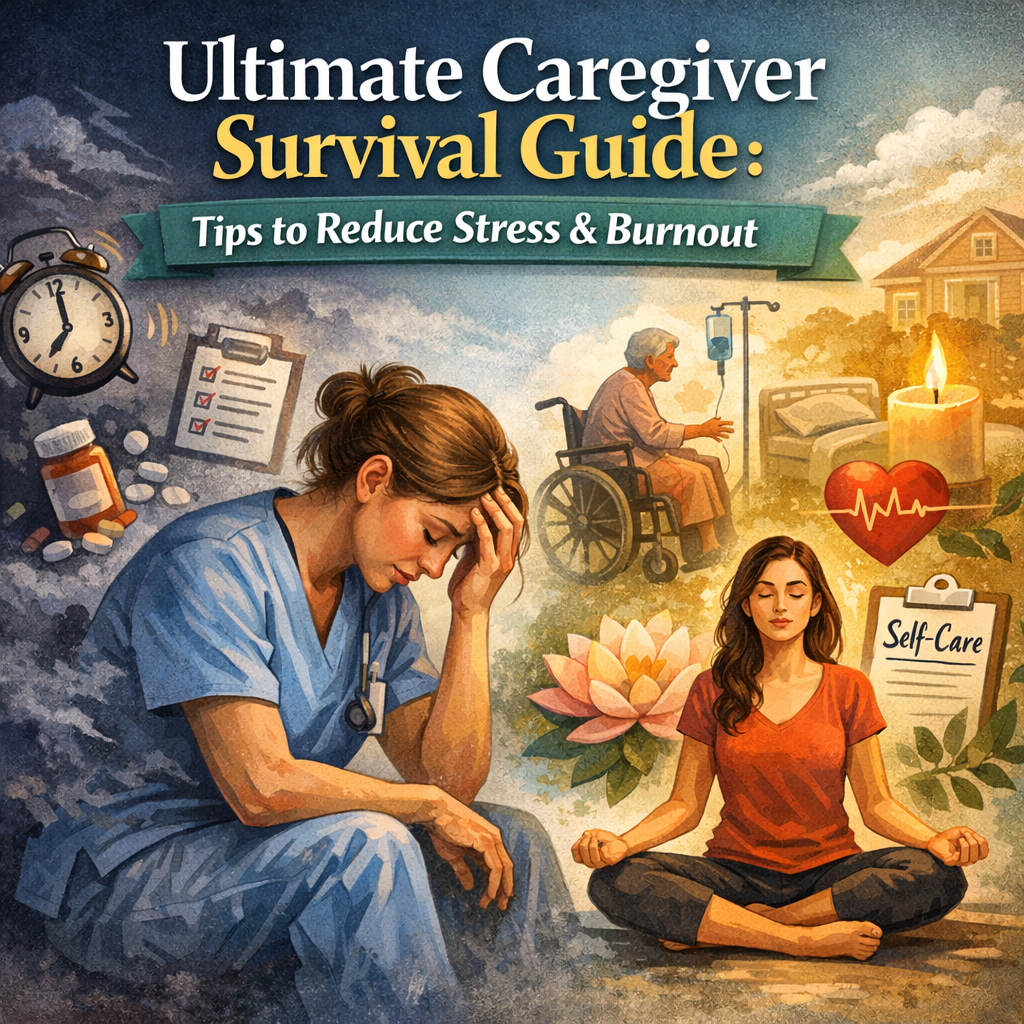
Ultimate Caregiver Survival Guide: Tips to Reduce Stress & Burnout
The Ultimate Caregiver Survival Guide: Reducing Stress, Burnout, and Overwhelm
Caring for a loved one can be a rewarding yet overwhelmingly demanding role. As a caregiver, managing stress and preventing burnout is crucial not only for your well-being but also for the quality of care you provide. This guide offers practical strategies for managing caregiver stress, burnout, and overwhelm, helping you to maintain your strength and compassion.
Understanding Caregiver Stress and Burnout
First, it’s important to recognize the signs of stress and burnout:
- Physical signs: Exhaustion, changes in sleep patterns, frequent illness
- Emotional signs: Irritability, feelings of hopelessness, decreased satisfaction
- Behavioral signs: Withdrawal from social activities, changes in appetite, increased use of alcohol or drugs
Understanding these signs can help you take timely action to manage your stress.
Practical Strategies to Alleviate Stress
Establish a Routine
Creating a daily routine can provide structure and make the caring process more manageable. Here’s how you can organize a routine:
- Prioritize tasks: Identify what needs to be done daily and what can be done less frequently.
- Schedule breaks: Incorporate regular breaks to relax and recharge.
- Set boundaries: Clearly define your caregiving hours and personal time.
Build a Support Network
You don’t have to do it all alone. A support network can alleviate some of the burdens:
- Family and friends: Involve them in care when possible. They can offer respite and emotional support.
- Professional help: Consider hiring a professional caregiver to provide occasional backup.
- Community resources: Look for local support groups or services tailored for caregivers.
Prioritize Self-Care
Taking care of yourself is not an indulgence—it’s a necessity:
- Exercise regularly: Even short walks can boost your mood and reduce stress.
- Eat well: Nutritious meals can provide the energy needed for caregiving.
- Get enough sleep: Aim for 7-9 hours per night to prevent burnout.
Manage Emotions
Keeping your emotions in check is key to avoiding overwhelm:
- Practice mindfulness: Activities like meditation can help maintain emotional balance.
- Seek professional counselling: Sometimes, talking to a therapist can provide strategies to cope with the emotional demands of caregiving.
- Stay connected: Maintain social contacts outside of your caregiving duties to keep a broader perspective on life.
Use Technology
Various technological tools can make caregiving more manageable:
- Medical alert systems: Ensure safety while allowing you some freedom.
- Online calendars and apps: Track appointments, medication schedules, and important contacts.
- Remote monitoring tools: Keep an eye on your loved one even when you’re not there.
When to Seek Professional Help
Recognize when the situation is too much to handle alone:
- Increased stress markers: If signs of stress worsen, despite using these strategies.
- Health deterioration: If your physical or mental health declines significantly.
- Safety concerns: If you’re unable to ensure the safety of your loved one.
Professional help from a physician or mental health expert can provide the support needed to navigate these challenges.
Conclusion
Being a caregiver is a profound responsibility that often comes with high stress and potential burnout. By establishing a supportive routine, engaging a network, prioritizing self-care, managing emotions, and utilizing technology, you can significantly reduce the pressures of caregiving. Remember, taking care of yourself is essential to being able to take care of others. Prioritize your health and well-being to provide the best care possible to your loved one.
