
Aging-in-Place vs. Assisted Living: Choosing the Best Option for Seniors
Aging-in-Place vs. Assisted Living: How to Choose the Right Path for Your Loved One
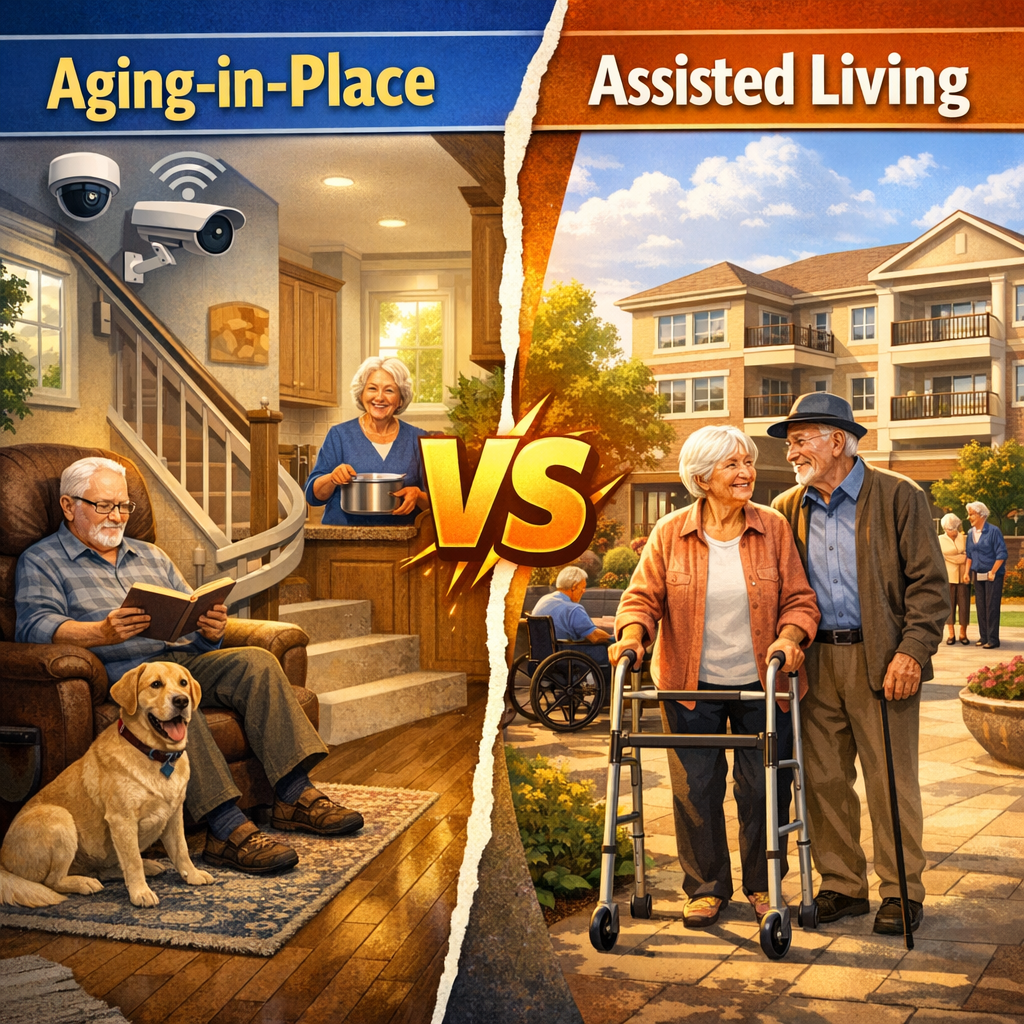
As our loved ones age, deciding the best way to support their needs becomes a crucial but sometimes challenging decision. Two popular options are “aging-in-place” — staying at home with some level of independence, and “assisted living” — moving to a facility designed to provide care and social activities. Each choice has its merits and challenges, and the right decision depends on individual needs, preferences, and health situations.
Understanding Aging-in-Place
Aging-in-place refers to seniors living in their own home or another familiar environment as they grow older, with varying degrees of assistance. This option is favored for its comfort and the continuity it offers in a familiar setting.
Benefits of Aging-in-Place:
- Familiarity and Comfort: Staying in a known environment can provide emotional and psychological benefits.
- Flexibility: Home modifications and in-home care are adaptable as needs change.
- Independence: Seniors maintain a higher degree of autonomy.
Considerations for Aging-in-Place:
- Home Safety: Modifications might be necessary, such as installing grab bars, ramps, and stairlifts.
- Caregiving Needs: Depending on the level of need, professional in-home care may be required, which can be expensive.
- Social Isolation: Without regular social interactions, aging-in-place might lead to loneliness.
Exploring Assisted Living
Assisted living facilities are residential options designed to assist seniors who require help with daily activities like bathing, dressing, and medication management. These facilities also often provide social activities, meals, and medical services.
Benefits of Assisted Living:
- Supportive Environment: Help is available around the clock for various needs.
- Social Opportunities: Residents can engage with peers and participate in planned activities.
- Safety and Security: Facilities are designed with the safety of seniors in mind and are equipped with professional staff.
Considerations for Assisted Living:
- Cost: Assisted living can be expensive, and costs are often not covered by Medicare.
- Loss of Familiar Environment: Moving away from home can be difficult for many seniors.
- Privacy: Living in a community setting might mean fewer opportunities for solitude.
Assessing Needs and Preferences
To make an informed decision between aging-in-place and assisted living, consider these factors:
Health and Mobility
- Assess the level of medical care your loved one needs daily. High-care needs may be better managed in an assisted living facility.
- Consider their mobility issues. Severe mobility problems might require the equipment and full-time care that assisted living facilities can provide.
Social Needs and Preferences
- Determine the social needs of your loved one. Do they thrive on social interactions, or do they prefer solitude?
- Evaluate how well your loved one adjusts to new environments. Some may find the transition to a new home exhilarating, while others might find it disorientating.
Financial Considerations
- Review your financial situation carefully. Long-term in-home care can be as costly as assisted living, depending on the frequency and level of care needed.
- Check what kinds of costs your insurance covers. This can greatly influence the affordability of options.
Making the Decision
- Talk with Your Loved One: Ensure their wishes are considered in this significant life decision.
- Consult Healthcare Providers: Their insights on your loved one’s health can guide you toward the right choice.
- Visit Assisted Living Facilities: Get a feel for the environment and the type of care provided.
- Evaluate Home Safety: Determine if the current living situation can be safely modified.
Choosing between aging-in-place and assisted living is a multifaceted decision that should be made with the well-being and happiness of your loved one in mind. It’s not just about care, but about quality of life. Whether they continue to live at home or move to an assisted living facility, the right choice supports their health, happiness, and dignity.