
Essential Home Modifications for Senior Safety & Independence 2026
Top Home Modifications to Improve Senior Safety and Independence in 2026
As our loved ones age, ensuring their safety and independence becomes a top priority. With the advancements in technology and design, 2026 introduces innovative yet simple home modifications that can significantly enhance the living conditions for seniors. Here’s a list of the best home improvements to consider to ensure comfort, safety, and independence for the elderly.
Major Areas of Focus
1. Entrance and Exit Modifications
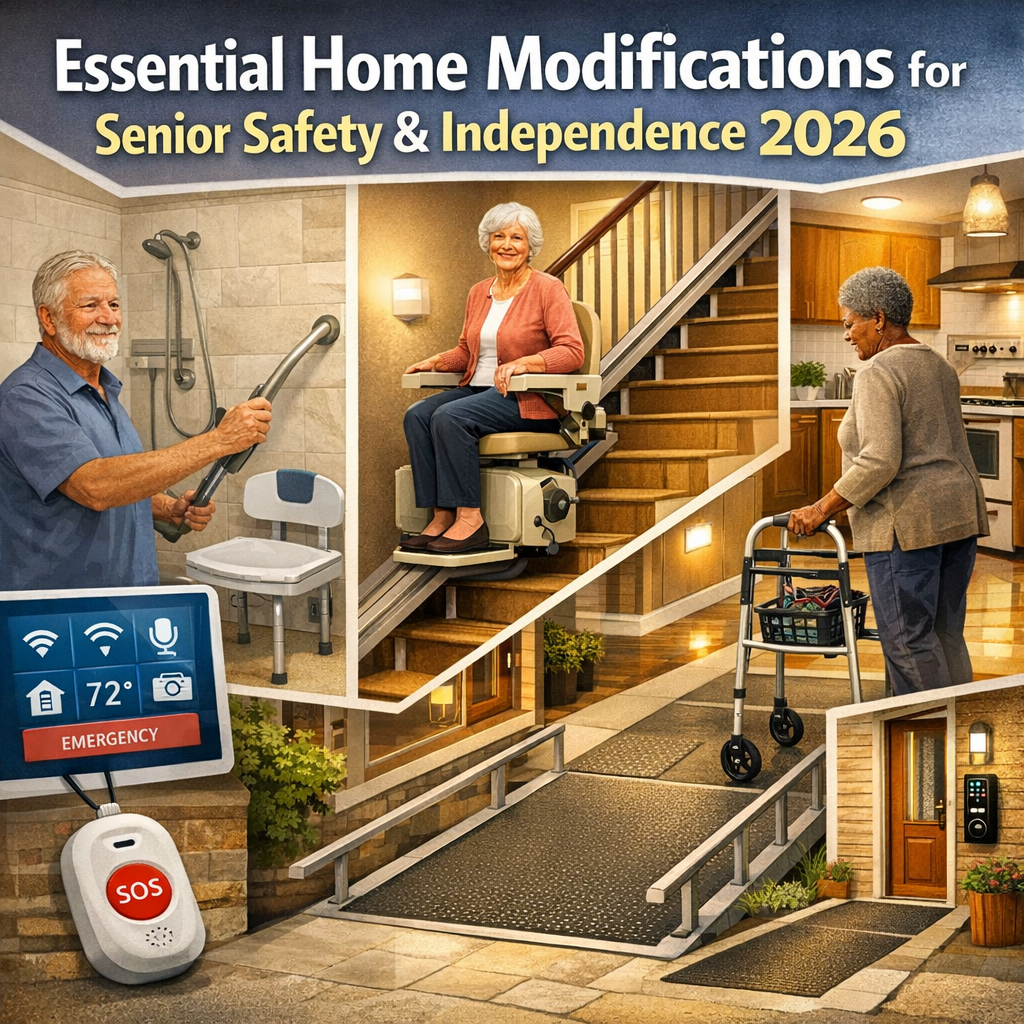
- Ramps and Rails: Replace steps with ramps for easier wheelchair or walker access and install sturdy handrails for additional support.
- Smart Door Locks: Upgrade to smart locks that can be easily operated remotely or via simple touch pads to prevent struggles with traditional keys.
2. Bathroom Safety Enhancements
- Walk-in Tubs and Showers: Install walk-in bathtubs and showers to minimize the risk of slips and falls, a common issue in traditional bathroom setups.
- Grab Bars: Equip bathrooms with robust grab bars next to the toilet and in the shower area to provide balance support.
- Anti-Slip Flooring: Replace existing bathroom flooring with anti-slip tiles to improve grip and reduce accident risks.
3. Kitchen Adaptations
- Lowered Countertops: Adjust the height of countertops to accommodate seniors who may find it easier to work from a seated position.
- Touch-activated Faucets: Include faucets that operate with a simple touch or motion sensor to ease the use for those with limited hand strength.
- Pull-out Shelves and Lazy Susans: Retrofit cabinets with pull-out shelves and lazy Susans to allow easy access to pantry essentials, reducing the need to reach for high or deep spaces.
Functional Upgrades Throughout the Home
Illumination and Accessibility
- Enhanced Lighting: Increase the level of lighting throughout the home with brighter and more strategically placed light fixtures to help seniors see better.
- Automated Systems: Install voice-controlled smart home systems for controlling lights, thermostats, and other appliances without the need to physically maneuver switches.
Furniture and Floor Modifications
- Non-Slip Rugs: Secure all rugs with non-slip backing or replace them with wall-to-wall carpeting to minimize trip hazards.
- Appropriate Furniture Height: Ensure that furniture is of a suitable height, particularly armchairs and beds, to facilitate easy sitting and standing.
Stair Safety
- Stairlifts: If moving to a single-level home isn’t an option, consider installing a stairlift to help seniors move between floors safely.
- Enhanced Railings: Double-check that all staircases have sturdy, well-maintained railings on both sides.
Smart Technology for Everyday Convenience
Health Monitoring
- Remote Health Monitoring Devices: Utilize devices that can monitor vital sign statistics and send alerts to family members or caregivers when irregularities occur.
- Emergency Response Systems: Set up systems that allow seniors to easily call for help in case of an emergency, such as wearable pendants or devices equipped with fall detection technologies.
Automation and Security
- Surveillance Cameras: Install cameras in key areas to monitor activities and ensure that seniors are safe without intruding on their independence.
- Voice Assistants: Incorporate voice-activated devices that can help with reminders for medication, appointments, and even offer simple companionship.
By integrating these modifications and technologies into their living spaces, seniors can enjoy a higher degree of safety and independence, making 2026 a banner year for elderly care at home. Not only do these improvements provide families with peace of mind, but they also help seniors maintain a quality life with dignity and respect.