
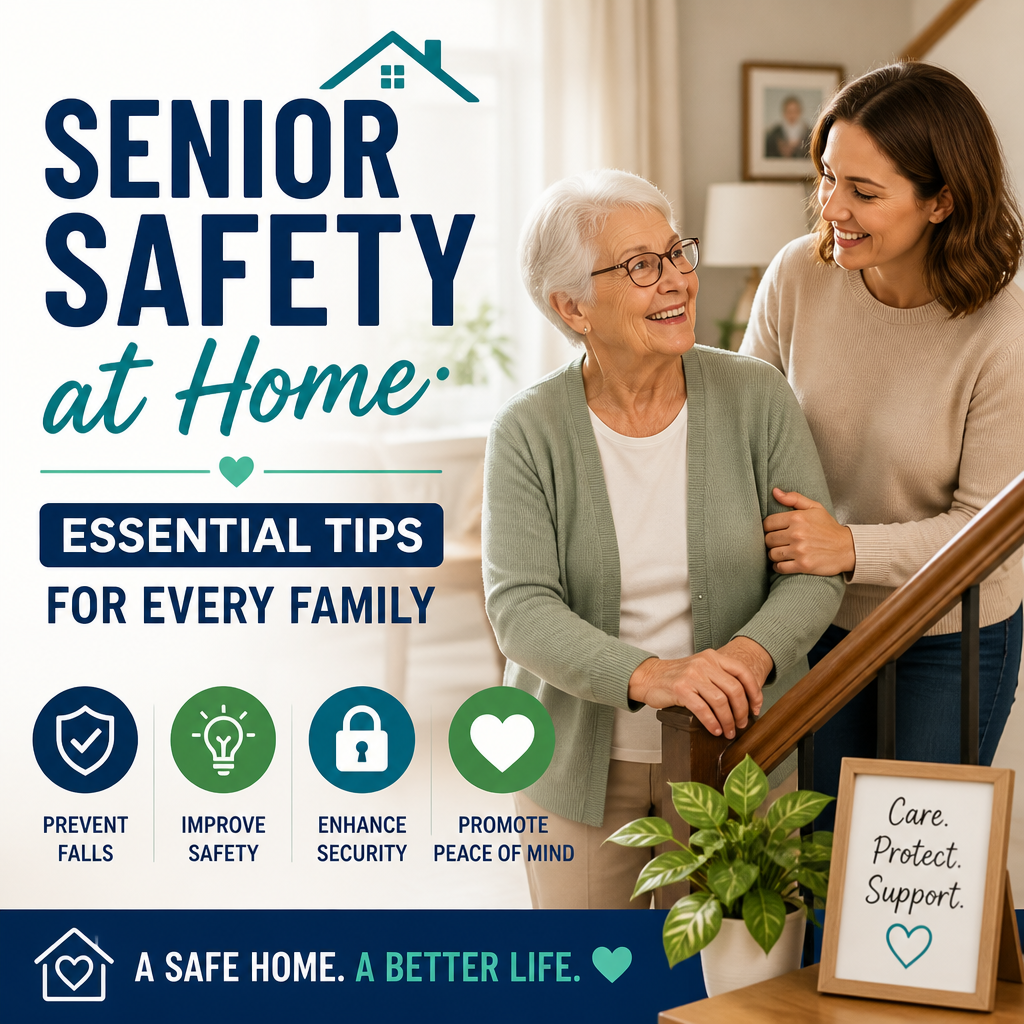
Senior Safety at Home: Essential Tips for Every Family
Senior Safety at Home: Essential Tips Every Family Should Know
Home should be a place where older adults feel comfortable, independent, and secure. But changes in balance, vision, strength, or memory can make everyday tasks more challenging. A few thoughtful adjustments can reduce risks while helping seniors remain at home with confidence.
Senior safety at home is not about removing independence. It is about making the environment easier to navigate, planning for emergencies, and checking in regularly.

Reduce the Risk of Falls
Falls are a common cause of injury among older adults, and many happen during ordinary routines. Look for hazards throughout the home, especially in hallways, bathrooms, and areas used at night.

Start with these practical changes:

- Remove loose rugs, clutter, and electrical cords from walkways.
- Keep frequently used items within easy reach to avoid climbing or stretching.
- Add sturdy handrails on both sides of stairways, if possible.
- Use non-slip mats in the bathtub or shower.
- Ensure stairs and entrances are well lit, with switches at the top and bottom.
- Arrange furniture to create clear paths through each room.
Encourage seniors to wear well-fitting shoes with non-slip soles rather than walking in socks or loose slippers. If balance or mobility has changed, a healthcare professional can assess whether a cane, walker, or physical therapy may help.
Make the Bathroom Safer
Bathrooms can be slippery and difficult to navigate. Grab bars near the toilet and inside the shower or tub provide support, but they should be securely installed into wall studs or with appropriate professional mounting. Towel bars are not designed to hold a person’s weight.

A raised toilet seat, shower chair, or handheld showerhead may also make daily routines easier. Keep soap, towels, and toiletries within reach, and use a night-light between the bedroom and bathroom.

If remodeling is an option, a walk-in shower with a low threshold can reduce the need to step over a high tub wall.
Improve Lighting and Visibility
Good lighting helps prevent trips and makes it easier to read medication labels, see stairs, and move around safely. Replace dim bulbs, add lamps to darker corners, and install night-lights along commonly used routes.
Motion-sensor lights can be useful near entrances, stairways, and bathrooms. Keep light switches easy to reach, and consider contrasting colors on stair edges or doorways for people with reduced vision.
Review Medication and Fire Safety
Medication routines can become confusing, especially when several prescriptions are involved. Use a clearly labeled pill organizer or a medication reminder system, and keep an up-to-date list of prescriptions, doses, allergies, and healthcare contacts. A pharmacist or doctor can review the list and identify possible side effects, including dizziness or drowsiness that may increase fall risk.
Check smoke and carbon monoxide alarms regularly, and replace batteries according to the manufacturer’s instructions. Keep a fire extinguisher accessible and make sure everyone knows how to leave the home in an emergency. Avoid overloading electrical outlets, and keep space heaters away from curtains, bedding, and other flammable materials.
Plan for Emergencies
Keep a phone within reach, particularly in the bedroom and bathroom. A charged mobile phone, wearable emergency alert device, or voice-activated assistant may help someone call for assistance after a fall or sudden illness.
Create a simple emergency plan that includes:
- Emergency contacts and nearby family or neighbors
- Medical conditions, allergies, and current medications
- A spare key arrangement for trusted helpers
- A plan for power outages or severe weather
Some families also schedule daily check-ins. A missed call or message can prompt a timely visit or request for help.
Support Independence Through Regular Check-Ins
Safety needs can change over time. Ask the older adult what feels difficult rather than making changes without discussion. A home-safety assessment from an occupational therapist, healthcare provider, or qualified local service can identify practical improvements tailored to the person and the home.
Notice changes such as new unsteadiness, trouble managing meals, missed medications, or difficulty using stairs. These may signal a need for additional support, not a loss of independence. Small adjustments, respectful conversations, and reliable check-ins can help seniors stay safer and more comfortable at home.