
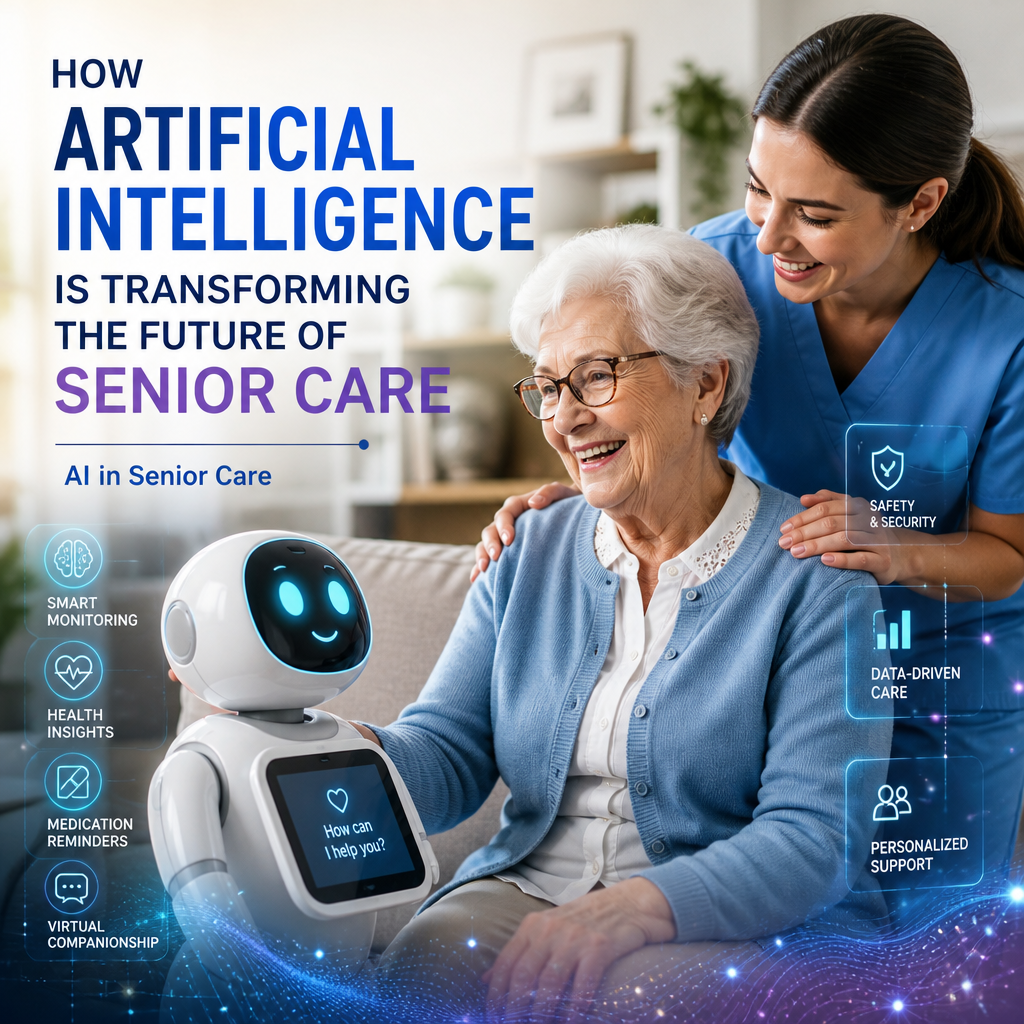
How Artificial Intelligence Is Transforming the Future of Senior Care
The Future of Senior Care: Why Artificial Intelligence Is Changing Everything
Senior care is entering a new era. As populations age and care teams face growing demands, artificial intelligence (AI) is helping people live safer, healthier, and more independent lives. From monitoring health at home to supporting staff in care facilities, AI is changing how care is delivered—and how families stay connected.
The goal is not to replace human caregivers. It is to give them better tools, more timely information, and more time for the personal interactions that matter most.

How AI Is Already Supporting Older Adults
AI combines data from devices, software, and health records to identify patterns and support decisions. In senior care, that can mean spotting a change in someone’s routine or flagging a potential health concern before it becomes an emergency.

Earlier alerts and safer homes
Wearable devices and home sensors can track activity, movement, sleep, and other indicators. Some systems can detect falls or unusual inactivity and notify a caregiver or family member. Others may recognize changes in a person’s daily habits, such as spending less time moving around the home.

These tools can provide reassurance, especially for older adults who live alone. They may also help caregivers respond faster when something appears to be wrong. However, alerts are most useful when they are reliable and connected to a clear response plan.
More personalized health support
AI-powered tools can help care teams review information from multiple sources, including medical records, wearable devices, and patient-reported symptoms. By bringing these details together, they can make it easier to notice trends and tailor support to an individual.

For example, a care team might use changes in sleep or activity data as a prompt to check in with someone. AI can also support medication reminders and virtual health services, helping older adults manage daily routines and attend appointments without unnecessary travel.

These tools do not diagnose or treat people independently. Clinical decisions still require qualified health professionals who understand a person’s needs and circumstances.
Helping Caregivers Do More of What Matters
Care workers often spend significant time on documentation, scheduling, and administrative tasks. AI can help reduce some of that workload by organizing records, drafting routine notes, or matching staff availability with care needs.
When these tasks take less time, caregivers may be able to devote more attention to residents and clients. AI can also help managers identify staffing gaps and anticipate changes in demand, supporting smoother day-to-day operations.
The technology can support families, too. Digital platforms may make it easier to share updates among relatives, caregivers, and health professionals. Clear communication can reduce uncertainty and help everyone work toward the same care goals.
Keeping People at the Center
The promise of AI in senior care comes with important responsibilities. Health and personal data are sensitive, so organizations must protect them and explain clearly how information is collected, stored, and used. Older adults should be able to understand the technology and make informed choices about whether to use it.
AI systems can also make mistakes. A sensor may misread an event, or a system trained on limited data may work less well for certain groups. Care teams need ways to check automated alerts, correct errors, and recognize when human judgment should take priority.
Accessibility matters as well. Technology should be easy to use for people with different abilities, levels of digital experience, and language needs. It should support older adults’ independence—not make them feel watched, pressured, or excluded.
What the Future May Bring
In the years ahead, AI may help coordinate care across homes, clinics, and residential communities. More connected systems could give care teams a fuller picture of a person’s needs, while predictive tools may help identify risks early enough for preventive support.
Still, the best outcomes will depend on more than advanced software. They will require thoughtful design, strong privacy protections, staff training, and meaningful input from older adults and their families.
A Powerful Tool, Not a Substitute for Care
Artificial intelligence is changing senior care by helping people notice patterns, respond sooner, and manage everyday tasks. Its greatest value lies in strengthening human care—not replacing compassion, experience, or personal connection.
When implemented responsibly, AI can help older adults maintain greater independence and give caregivers practical support. The future of senior care will be shaped not simply by what technology can do, but by how wisely people choose to use it.