

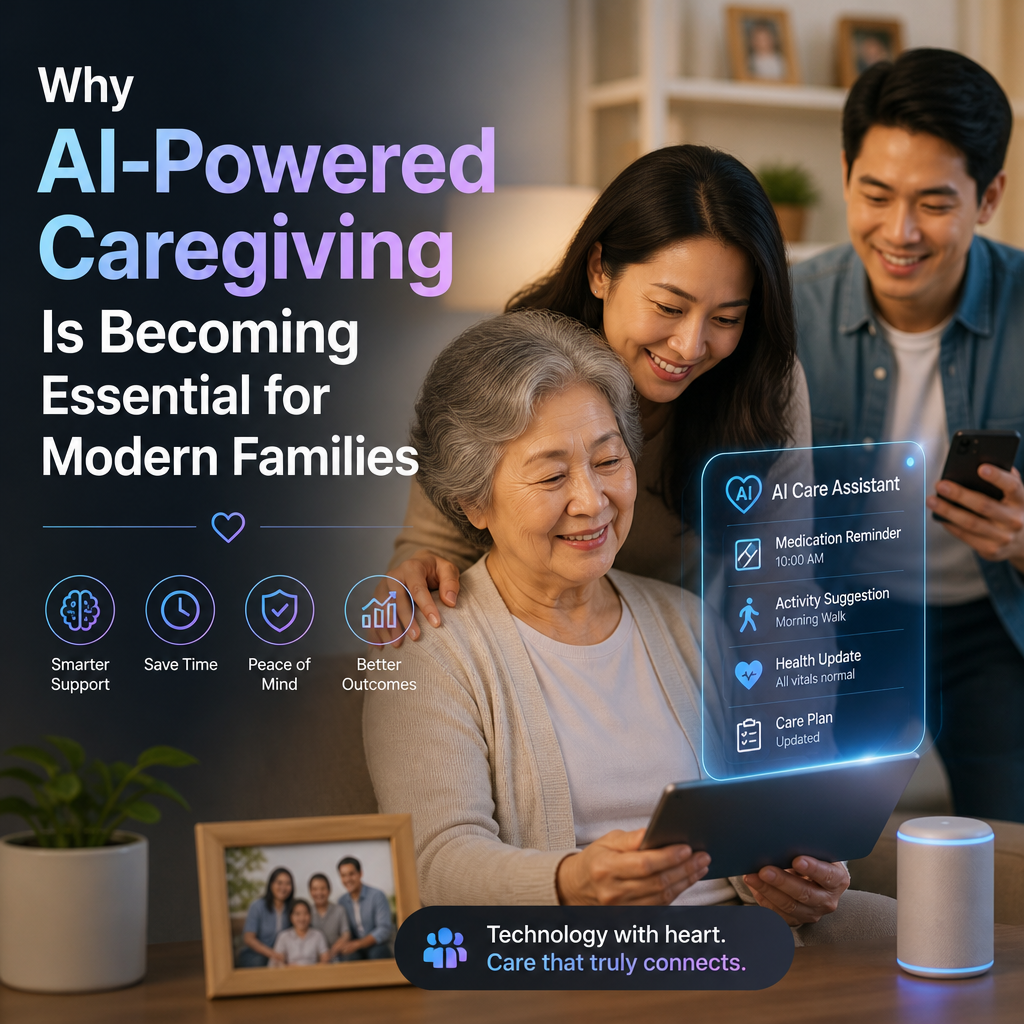
Why AI-Powered Caregiving Is Becoming Essential for Modern Families
Why AI-Powered Caregiving Is Becoming Essential for Modern Families
Caring for a child, an older relative, or a family member with a chronic condition can be deeply meaningful—and demanding. Many households are balancing caregiving with work, parenting, and other responsibilities, often across different cities or time zones. In this reality, AI-powered caregiving is becoming a practical way to help families stay organized, notice changes, and coordinate support.
Artificial intelligence cannot replace human compassion or professional care. Its growing role is to handle routine tasks and surface useful information, giving caregivers more time and attention for the person who matters.

Families Are Managing More Complex Care
Longer life expectancy, smaller households, and relatives living farther apart have changed how families provide care. One person may be coordinating appointments, medication schedules, transportation, and updates from several caregivers—often while holding a full-time job.

Even when families share responsibilities, important details can be missed. A schedule may live in one person’s phone, while another caregiver has the latest update from a doctor. Digital tools that organize information and send timely reminders can reduce this everyday friction.

What AI-Powered Caregiving Can Do
AI-enabled caregiving tools vary widely. Some are apps that help manage routines, while others connect with wearable devices or smart-home sensors. Depending on the product and how it is used, they may help families:
- Organize appointments, medication reminders, and daily routines
- Share updates and tasks among family members and care professionals
- Spot patterns in sleep, activity, or daily habits
- Receive alerts when a routine changes or a scheduled check-in is missed
- Find relevant information and prepare questions for a clinician
The goal is not to have technology make every decision. It is to make useful information easier to access, especially when caregivers are busy or cannot be physically present.

A Wider Safety Net for Older Adults
For older adults who want to remain at home, consistent check-ins can offer reassurance to both the individual and their family. A reminder to take medication or a prompt to contact a loved one may support independence without requiring constant supervision.

Some systems can also flag changes in a person’s usual routine. For example, a noticeable shift in activity or sleep could prompt a family member to check in. Such signals are not diagnoses, and they may have many explanations. But they can help caregivers ask timely questions rather than relying only on occasional calls or visits.
Technology works best when it supports a person’s preferences and dignity. Older adults should be involved in decisions about what is monitored, who can see the information, and how alerts are handled.
Reducing Caregiver Stress and Coordination
Caregiver stress often comes not only from hands-on tasks but from the mental load of remembering everything. AI tools can take on some of that organizational work: updating shared calendars, tracking tasks, or helping summarize notes for family discussions.
That support can be especially useful when several people are involved. A shared system can make responsibilities clearer and reduce repeated messages about who is picking up prescriptions or attending an appointment. It may also help distant relatives stay informed without asking the primary caregiver for constant updates.
These tools do not remove the need for conversation. Instead, they can give families a common place to begin those conversations.
Privacy, Accuracy, and Human Judgment Matter
More technology does not automatically mean better care. Health-related and behavioral data can be sensitive, so families should understand what an app or device collects, where the information is stored, and who can access it. Strong passwords, clear consent, and careful review of privacy policies are important.
AI systems can also make mistakes, misread patterns, or produce alerts that are not meaningful. Families should treat automated insights as prompts for attention—not as medical advice or proof that something is wrong. Important symptoms and care decisions should be discussed with qualified professionals.
Accessibility matters, too. A useful tool should be easy to use, affordable, and compatible with the person’s devices and abilities. If technology creates confusion or anxiety, a simpler approach may be more appropriate.
A Helpful Partner, Not a Replacement
AI-powered caregiving is becoming essential because modern families need reliable ways to coordinate support amid busy schedules and growing care needs. Used thoughtfully, it can strengthen communication, reduce routine burdens, and help families respond to changes sooner.
The most effective approach combines technology with human judgment, professional guidance, and regular conversation. AI can help keep the details in order, but care still depends on trust, empathy, and people showing up for one another.
