

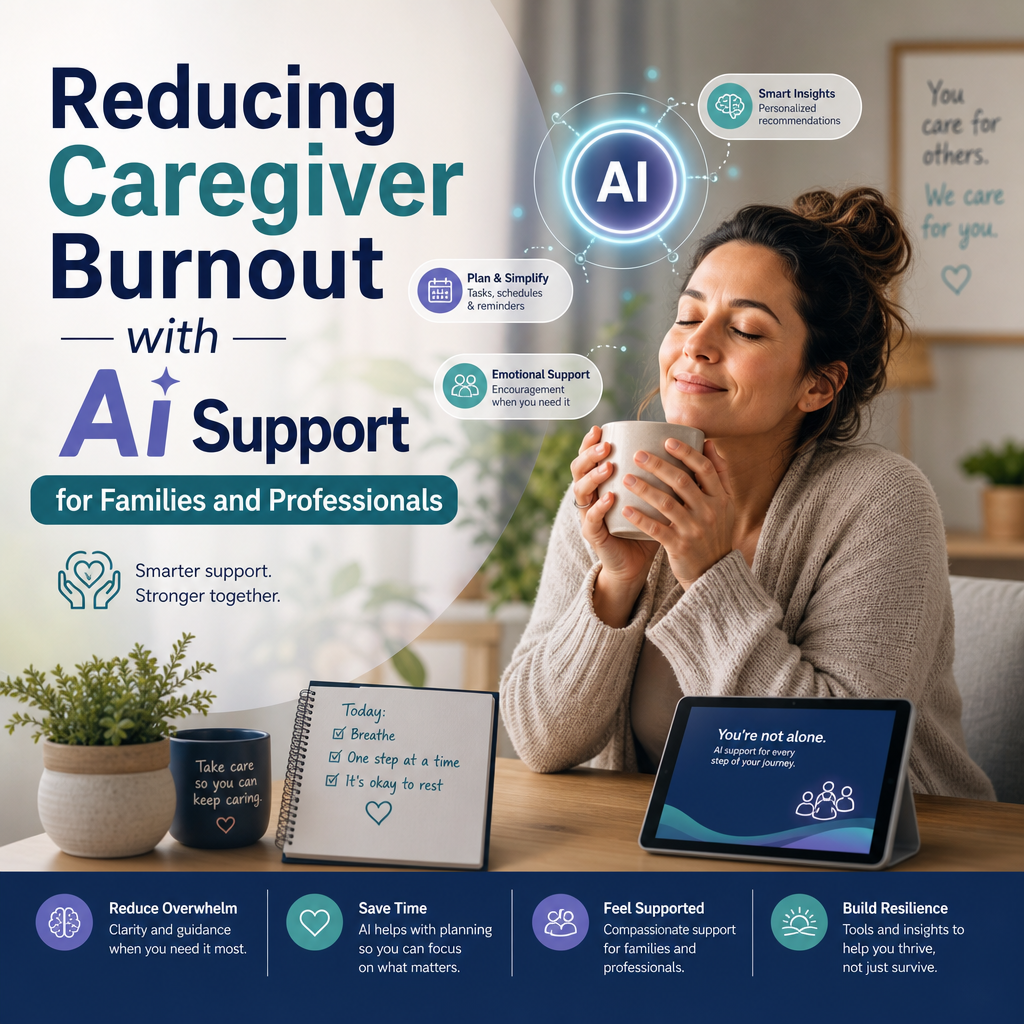
Reducing Caregiver Burnout with AI Support for Families and Professionals
Reducing Caregiver Burnout with AI: A New Era of Support for Families and Professionals
Caregiving is one of the most meaningful roles a person can take on, but it is also one of the most demanding. Family caregivers and healthcare professionals often juggle medication schedules, appointments, emotional support, safety concerns, and daily routines with very little rest. Over time, this constant pressure can lead to exhaustion, stress, and compassion fatigue.
That is why reducing caregiver burnout with AI is becoming an important conversation in both home care and professional healthcare settings. Artificial intelligence is not replacing human care. Instead, it is helping caregivers work smarter, respond faster, and protect their own well-being while continuing to support others.

What Caregiver Burnout Really Looks Like
Caregiver burnout is more than feeling tired after a long day. It can build slowly and affect every part of life.

Common signs include:

- Chronic fatigue
- Anxiety or irritability
- Sleep problems
- Difficulty concentrating
- Feelings of isolation
- Loss of patience or emotional energy
For family members caring for aging parents or loved ones with chronic conditions, burnout can also come with guilt. Many feel they should be able to do it all on their own. Professional caregivers face similar struggles, especially in understaffed environments where demand keeps growing.
This is where AI can offer real support.

How AI Helps Reduce Daily Caregiving Pressure
AI tools can take over repetitive tasks, provide real-time alerts, and make it easier to organize care. Even small improvements can have a major impact on stress levels.

Smarter Scheduling and Reminders
One of the biggest sources of caregiver stress is keeping track of everything. AI-powered apps can help manage:
- Medication reminders
- Appointment scheduling
- Therapy routines
- Meal planning
- Sleep and activity tracking
Instead of relying on handwritten notes or memory, caregivers can use intelligent systems that send alerts, flag missed tasks, and adjust plans when routines change.
Monitoring Without Constant Watching
Many caregivers feel they must always be “on.” AI-enabled monitoring tools can reduce that pressure by helping watch for safety issues such as:
- Falls
- Wandering
- Changes in sleep patterns
- Missed medications
- Sudden health changes
These tools do not remove the human element. They simply make it easier to notice problems early, without requiring a caregiver to be physically present every second of the day.
For families, that can mean fewer sleepless nights. For professionals, it can mean quicker interventions and better prioritization.
Emotional Relief Through Better Information
Stress often grows when caregivers feel uncertain. Is a symptom serious? Has behavior changed? Is the current care plan working?
AI can help by organizing health data and turning it into useful insights. Some systems can identify patterns over time, such as gradual mobility decline or increased confusion, allowing caregivers and clinicians to respond earlier.
This kind of support offers emotional relief because it replaces guesswork with clearer information. Instead of constantly worrying about what might happen, caregivers can make more informed decisions.
Supporting Professional Care Teams
In hospitals, assisted living facilities, and home health agencies, burnout is also a staffing and workflow issue. AI tools can help professionals by reducing administrative load and improving communication.
Less Paperwork, More Patient Time
Documentation takes up a large part of a caregiver’s day. AI can assist with:
- Voice-to-text note taking
- Automated chart summaries
- Shift handoff reports
- Care plan updates
- Task prioritization
When professionals spend less time on paperwork, they can spend more time delivering compassionate, person-centered care.
Better Team Coordination
Care often involves multiple people: nurses, aides, physicians, therapists, and family members. AI systems can help centralize updates so everyone sees the same information.
That reduces confusion, avoids duplicated effort, and helps teams act faster. Better communication leads to lower stress for both caregivers and care recipients.
AI for Family Caregivers at Home
Family caregivers often have the fewest resources and the greatest emotional burden. Many are balancing caregiving with work, parenting, and household responsibilities.
AI can support them in practical ways:
Personalized Assistance
Virtual assistants and care platforms can answer questions, offer reminders, and provide guidance tailored to a loved one’s condition or daily routine.
Respite Through Automation
Simple automations, like medication alerts, smart home safety checks, or appointment coordination, can free up mental space. That matters because burnout is not only about time. It is also about the constant mental load of remembering and managing everything.
Confidence and Peace of Mind
Knowing that a system can alert you to urgent changes can make it easier to step away, rest, or ask for help. That sense of backup can be incredibly valuable.
Important Limits to Keep in Mind
While the benefits are promising, AI is not a complete solution. It works best as a support tool, not a replacement for empathy, judgment, or human connection.
Caregivers should also consider:
- Privacy and data security
- Ease of use for older adults
- Accuracy of alerts and recommendations
- The need for human oversight
Technology should reduce stress, not create more of it. The best AI tools are simple, trustworthy, and designed around real caregiving needs.
A More Sustainable Future for Care
The need for care is growing, and so is the risk of burnout. Families and professionals need more than encouragement; they need practical support that fits into everyday life.
That is why reducing caregiver burnout with AI matters so much. By helping with monitoring, scheduling, communication, and decision-making, AI can lighten the load without taking away the human heart of caregiving.
The future of care is not human versus machine. It is human care strengthened by smarter tools. And for exhausted caregivers everywhere, that shift could make all the difference.
