

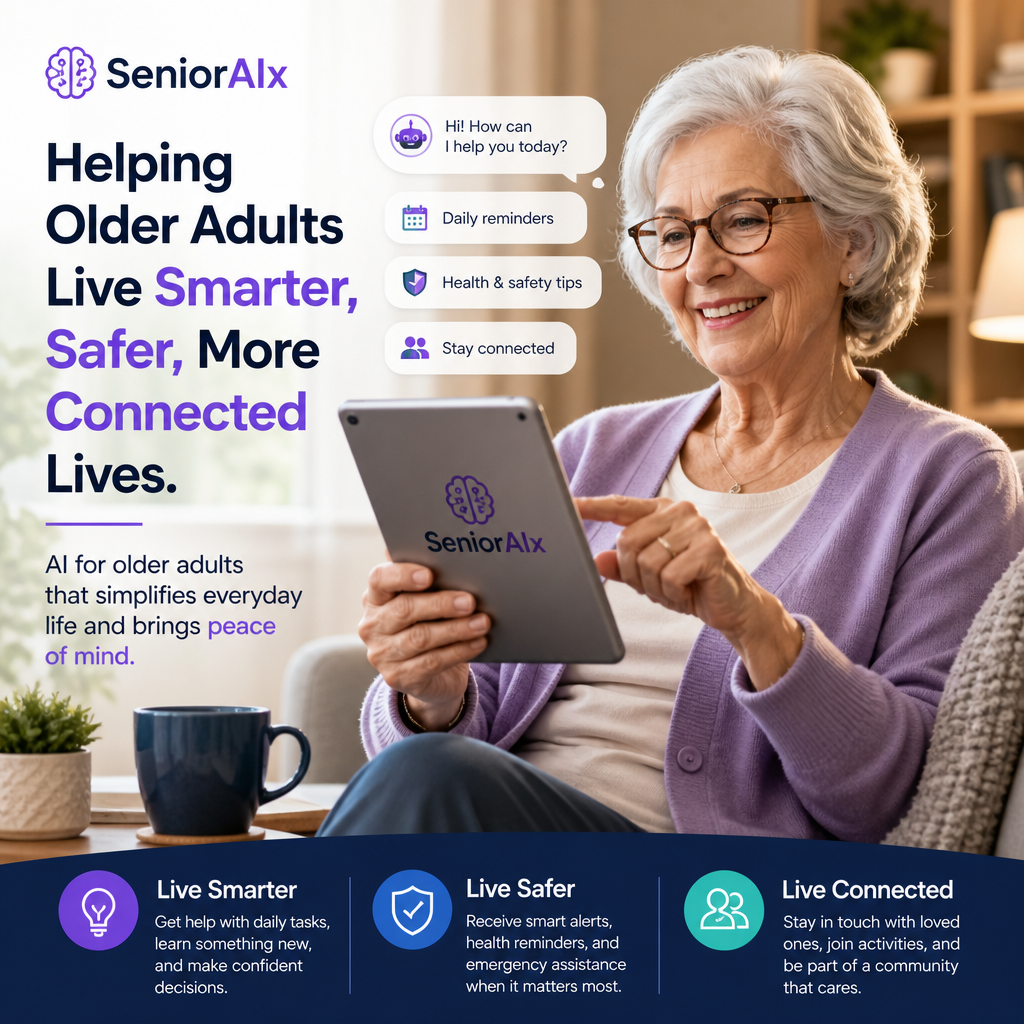
SeniorAIx Helps Older Adults Live Smarter, Safer, More Connected Lives
How SeniorAIx Helps Older Adults Live Smarter, Safer, and More Connected Lives
Technology can make everyday life easier, but it should feel helpful—not confusing or intrusive. SeniorAIx is designed around that idea: using accessible artificial intelligence to support older adults with daily tasks, personal safety, and meaningful connections. When technology is simple to use and shaped around individual needs, it can help people maintain independence while staying closer to family, caregivers, and community.
Making Everyday Tasks Easier
Small tasks can take extra time or effort as needs change. A well-designed AI assistant can help organize information, answer questions, and make routine activities more manageable. With clear instructions and conversational interaction, older adults can access support without needing to navigate complicated menus or remember a series of steps.

Depending on the tools available, SeniorAIx may help users:

- Set reminders for appointments, errands, or daily routines
- Find information using natural, everyday language
- Organize schedules and important details
- Get guidance with common technology questions
These forms of assistance can reduce the mental load of keeping track of many responsibilities. A reminder, for example, may help someone prepare for an appointment, while a simple voice or text interaction can make information easier to find.

The goal is not to take over decisions. It is to provide practical support that helps older adults stay in control of their own routines.
Supporting Safety and Peace of Mind
Feeling safe at home and when going about daily life is important for older adults and the people who care about them. Technology can contribute by making it easier to plan, communicate, and respond when something changes.

SeniorAIx can serve as a helpful layer of support by helping users manage reminders, access useful information, and stay in touch with trusted people. Depending on its specific features and setup, it may also complement other safety tools, such as medical alert devices or caregiver check-in systems.

It is important to understand what an AI service can—and cannot—do. An assistant is not a substitute for emergency services, professional medical advice, or direct human care. Families should review privacy settings, confirm how information is stored or shared, and choose tools that suit the older adult’s comfort level.
Used thoughtfully, AI can offer reassurance without replacing the relationships and services that keep people safe.
Helping People Stay Connected
Social connection is essential to well-being. Yet distance, busy schedules, mobility challenges, or unfamiliar technology can make it harder to keep in touch. A straightforward digital assistant can lower some of those barriers by helping users make calls, write messages, or remember important dates—when those features are available.
For families, technology can also make communication more consistent. A shared schedule or an easy way to check in can help relatives coordinate support while respecting an older adult’s independence.
Connection is about more than digital communication, however. SeniorAIx works best as a bridge to real relationships: encouraging conversations, helping people participate in community activities, and making it easier to reach out to others. AI can support companionship and communication, but it should complement human contact rather than replace it.
Designed for Confidence, Not Complexity
A tool is only useful if people can comfortably use it. Older adults have different preferences, abilities, and levels of experience with technology. That is why accessibility matters: readable text, straightforward instructions, flexible ways to interact, and clear control over personal information can all make a difference.
Getting started can be gradual:
- Choose one everyday need, such as reminders or help finding information.
- Set up the tool together with a trusted family member or support person.
- Practice a few useful tasks and adjust settings as needed.
- Review privacy choices and decide what information should remain private.
A patient introduction helps build confidence. Older adults should be able to ask questions, set boundaries, and decide which features they want to use.
A More Independent and Connected Future
SeniorAIx reflects a broader opportunity: using AI to make support more accessible while keeping people—not technology—at the center. By helping with everyday organization, contributing to peace of mind, and making communication easier, it can support older adults as they shape routines that work for them.
The most valuable technology is not necessarily the most advanced. It is the technology that feels understandable, respectful, and genuinely useful. When paired with trusted relationships and appropriate care, SeniorAIx can help older adults live smarter, safer, and more connected lives.
