
How Countries Use AI to Modernize Senior Care Infrastructure
How Countries Are Leveraging AI to Modernize Senior Care Infrastructure
As populations age, many governments are facing the same urgent question: how can senior care systems keep up with rising demand without sacrificing quality, dignity, or access?
One increasingly important answer is artificial intelligence. Around the world, countries are using AI to modernize senior care infrastructure, making services more responsive, efficient, and personalized. From remote monitoring to predictive care planning, these tools are helping healthcare systems support older adults in safer and smarter ways.

Why Senior Care Infrastructure Needs Modernization
Senior care infrastructure includes more than nursing homes or hospitals. It also covers:

- Home care services
- Community health programs
- Emergency response systems
- Long-term care facilities
- Digital health records and care coordination tools
In many countries, these systems were not designed for the scale of today’s aging populations. Staff shortages, rising costs, and fragmented services have made modernization a top policy priority.

That is where AI becomes especially valuable. Instead of replacing caregivers, AI can support them by reducing administrative burdens, identifying health risks earlier, and enabling more proactive care.
How AI Is Being Applied in Senior Care
Countries are leveraging AI to modernize senior care infrastructure in several practical ways.

Remote Monitoring and Fall Detection
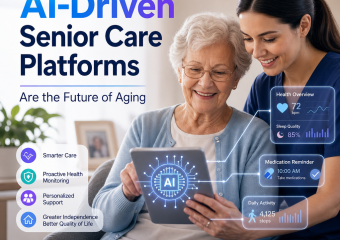
AI-powered sensors and wearable devices can track movement, sleep, heart rate, and daily routines. These systems can detect unusual patterns that may signal a fall, dehydration, or worsening health conditions.

For seniors living independently, this technology can provide an extra layer of safety without requiring constant in-person supervision. For caregivers and family members, it offers real-time alerts and peace of mind.
Predictive Health Analytics
AI can analyze large volumes of health data to identify patients at greater risk of hospitalization, cognitive decline, or medication complications.
This allows care providers to intervene earlier, which can reduce emergency admissions and improve long-term outcomes. In public health systems, predictive tools also help allocate resources more efficiently by identifying where support is likely to be needed most.
Virtual Assistants and Companionship Tools
Some countries are investing in AI-driven voice assistants and social robots to help older adults manage daily tasks such as:
- Taking medication on time
- Scheduling appointments
- Making video calls
- Receiving reminders for meals or exercise
While these tools are not substitutes for human connection, they can reduce isolation and support independent living, especially in rural or underserved areas.
Smarter Care Coordination
AI is also improving the way different providers communicate. By integrating medical histories, care plans, and service data, intelligent systems can help doctors, nurses, and home care workers make faster, better-informed decisions.
Better coordination is especially important for seniors with multiple chronic conditions who interact with several healthcare providers at once.
Global Examples of AI in Senior Care
Different countries are approaching this challenge in ways that reflect their healthcare systems, demographics, and policy priorities.
Japan: Responding to a Super-Aging Society
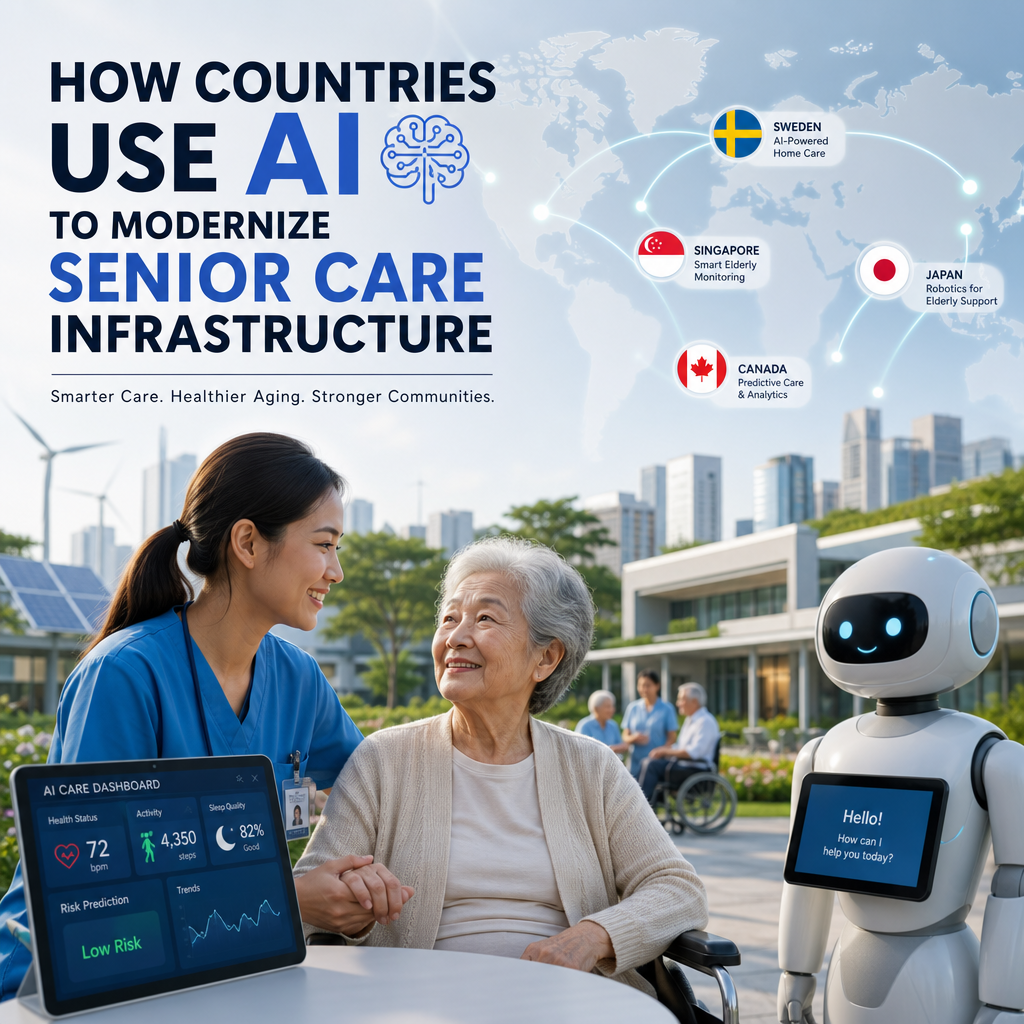
Japan is often seen as a global leader in this space because it has one of the world’s oldest populations. The country has adopted AI-enabled robotics, mobility support systems, and smart monitoring technologies in both residential care settings and private homes.
These tools help address a major labor shortage in elder care while also supporting older adults who want to remain independent for longer.
Singapore: Building Smart Health Ecosystems
Singapore has integrated AI into broader smart nation and healthcare initiatives. Remote health monitoring, digital records, and data-driven care planning are becoming central to how services are delivered to older residents.
The country’s approach shows how AI can modernize senior care infrastructure when it is connected to national planning, digital literacy efforts, and strong public health coordination.
Nordic Countries: Preventive and Community-Based Care
Several Nordic nations are using AI to strengthen aging-in-place strategies. Their focus is often on prevention, home support, and early intervention rather than relying heavily on institutional care.
By combining digital health platforms with community services, these countries are using AI to help seniors stay healthier and remain in familiar environments longer.
Benefits Beyond Efficiency
The value of AI in senior care is not limited to cutting costs or speeding up workflows. When used well, it can lead to more humane care.
Key benefits include:
- Earlier detection of health issues
- Greater independence for older adults
- Reduced caregiver stress
- Better access in remote regions
- More personalized care plans
In many cases, AI helps shift care from reactive to preventive. That change can improve quality of life while easing pressure on hospitals and long-term care facilities.
Challenges Countries Still Need to Solve
Even with its promise, AI in senior care comes with important concerns.
Privacy and Data Security
Senior care systems handle highly sensitive health and behavioral data. Governments and providers must ensure strong protections, transparent consent practices, and secure data management.
Digital Inclusion
Not all older adults are comfortable with technology. AI solutions must be designed with accessibility in mind, including simple interfaces, multilingual support, and options for those with hearing, vision, or cognitive limitations.
Human Oversight
AI should support care decisions, not make them in isolation. Trust depends on keeping trained professionals involved and ensuring that technology complements, rather than replaces, empathy and personal attention.
The Future of Senior Care Infrastructure
Countries are leveraging AI to modernize senior care infrastructure because the need is no longer optional. Aging populations are reshaping health and social care systems, and traditional models alone are unlikely to meet future demand.
The most effective strategies will combine technology with thoughtful public policy, workforce training, and human-centered design. AI can help create safer homes, stronger care networks, and more responsive health systems, but its success will depend on how well countries balance innovation with compassion.
In the years ahead, senior care infrastructure will likely become more connected, predictive, and personalized. For many nations, AI is not just a digital upgrade. It is becoming a core part of how dignified aging is supported at scale.