
How AI Is Transforming Senior Living and Elder Care in 2026
How AI Is Transforming Senior Living and Elder Care in 2026
Artificial intelligence is becoming a practical part of senior living and elder care. In 2026, it supports tasks ranging from spotting changes in a resident’s health to helping staff manage daily operations. Its greatest value is not replacing caregivers, but giving them better information and more time to provide personal, compassionate support.
AI tools vary widely, and not every community uses them in the same way. Still, several applications are reshaping how older adults receive care at home and in senior living communities.

Earlier Insights Into Health Changes
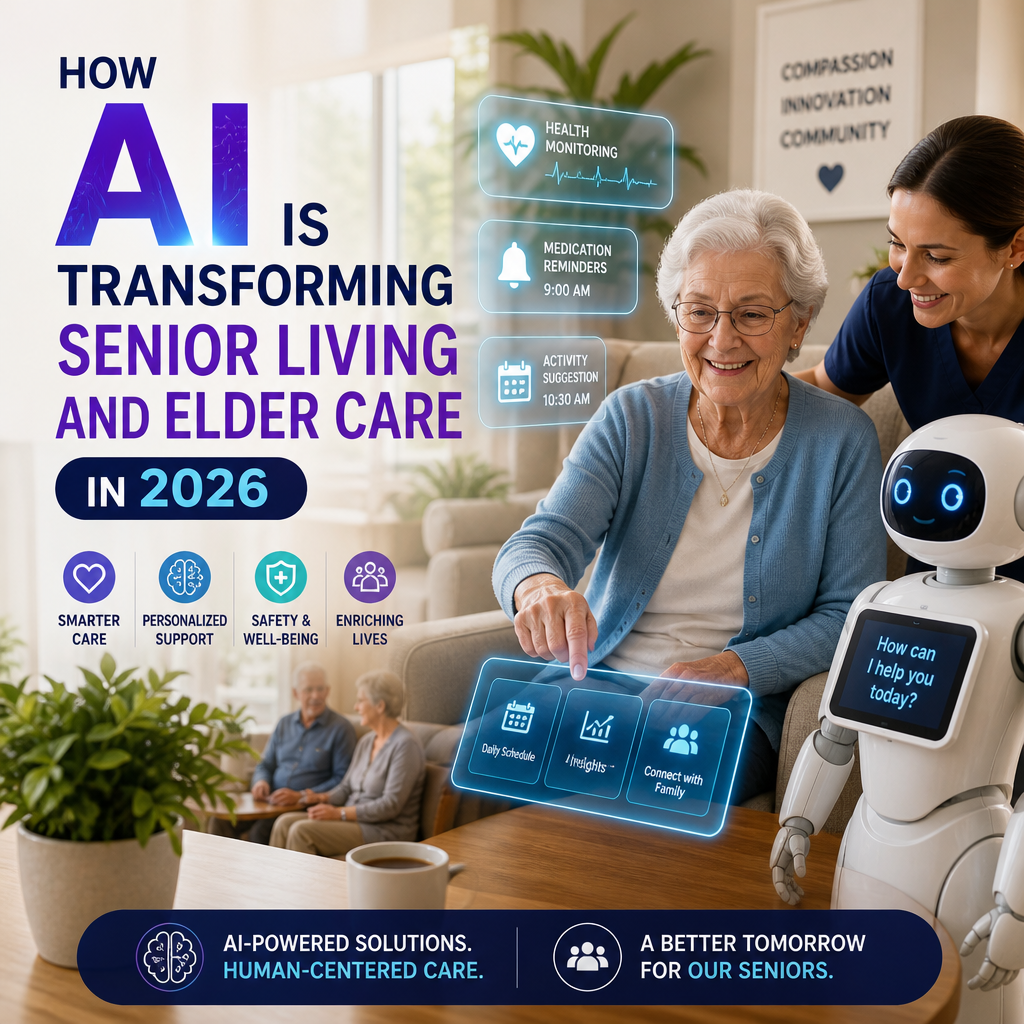
AI-powered systems can analyze information from wearable devices, motion sensors, health records, and routine check-ins. When a pattern changes—such as reduced movement, disrupted sleep, or a shift in vital signs—the system may alert a care team to investigate.

These insights can help staff notice potential concerns sooner. For example, a change in walking patterns might prompt a conversation about pain, medication effects, or fall risk. AI does not diagnose a resident on its own; it helps organize information that clinicians and caregivers can evaluate.

Some tools also support medication management through reminders and alerts about possible interactions. These systems can reduce missed doses or flag questions for a pharmacist or clinician, while leaving decisions about treatment to qualified professionals.
Safer, More Independent Living
For many older adults, maintaining independence is a priority. Smart-home technology can make that easier by automating lights, adjusting room temperatures, and responding to voice commands. AI assistants can also offer reminders about appointments, meals, or daily routines.

In senior living communities, discreet sensors may detect unusual inactivity or a possible fall and notify staff. Unlike cameras, some sensor-based systems can monitor movement without recording identifiable video. Residents should still be told clearly what is being monitored and be able to make informed choices whenever possible.

These tools are most helpful when they support—not restrict—independence. A reminder can encourage a person to complete a task themselves; an alert can bring assistance when it is genuinely needed.
More Time for Human Connection
Care teams often spend significant time documenting visits, coordinating schedules, and updating records. AI tools can help summarize notes, draft routine documentation, or identify information that needs follow-up. Staff must review generated content for accuracy, but administrative support can reduce repetitive work.
AI can also help communities plan staffing and organize maintenance requests. When routine tasks become more efficient, caregivers may have more time for conversations, activities, and one-to-one attention—the parts of care that technology cannot provide.
Support for Families
Families may use secure digital tools to receive updates, coordinate visits, or communicate with care teams. Some systems help organize information about appointments and daily routines, making it easier for relatives to stay involved, especially when they live far away.
However, access to information should follow the resident’s preferences and privacy rights. Family involvement is valuable, but older adults should remain central to decisions about their care.
Personalized Activities and Companionship
AI-enabled applications can suggest games, music, exercise, or learning activities based on a person’s interests and abilities. For someone living with cognitive changes, familiar songs or structured prompts may encourage engagement. Conversational tools can also provide reminders or casual interaction.
These applications can be useful, but they are not a substitute for relationships. A virtual companion cannot fully replace a trusted caregiver, friend, or family member. Communities should use digital activities as additions to social programs, not as a reason to reduce human contact.
The Importance of Privacy and Oversight
More connected care brings important responsibilities. Health information is sensitive, and residents should know what data a system collects, who can access it, and how long it is stored. Communities should choose secure tools, limit access to people who need it, and review how vendors handle information.
AI can also make mistakes or perform unevenly across different groups. Alerts may be inaccurate, and systems trained on limited data may not work equally well for everyone. Human review is essential, particularly for decisions involving health, safety, or access to services.
A thoughtful approach includes:
- Explaining technology in plain language.
- Asking for consent and respecting individual preferences.
- Providing non-digital options where possible.
- Training staff to use tools and question unreliable results.
- Reviewing outcomes regularly for safety and fairness.
A More Supportive Future
AI is transforming senior living and elder care by making useful information easier to act on and routine work more manageable. The best results come when technology is chosen for a clear purpose, designed around residents’ needs, and guided by skilled people.
In 2026, successful care will not be measured by how many AI tools a community adopts. It will be measured by whether those tools help older adults feel safer, remain more independent, and receive attentive, human care.