

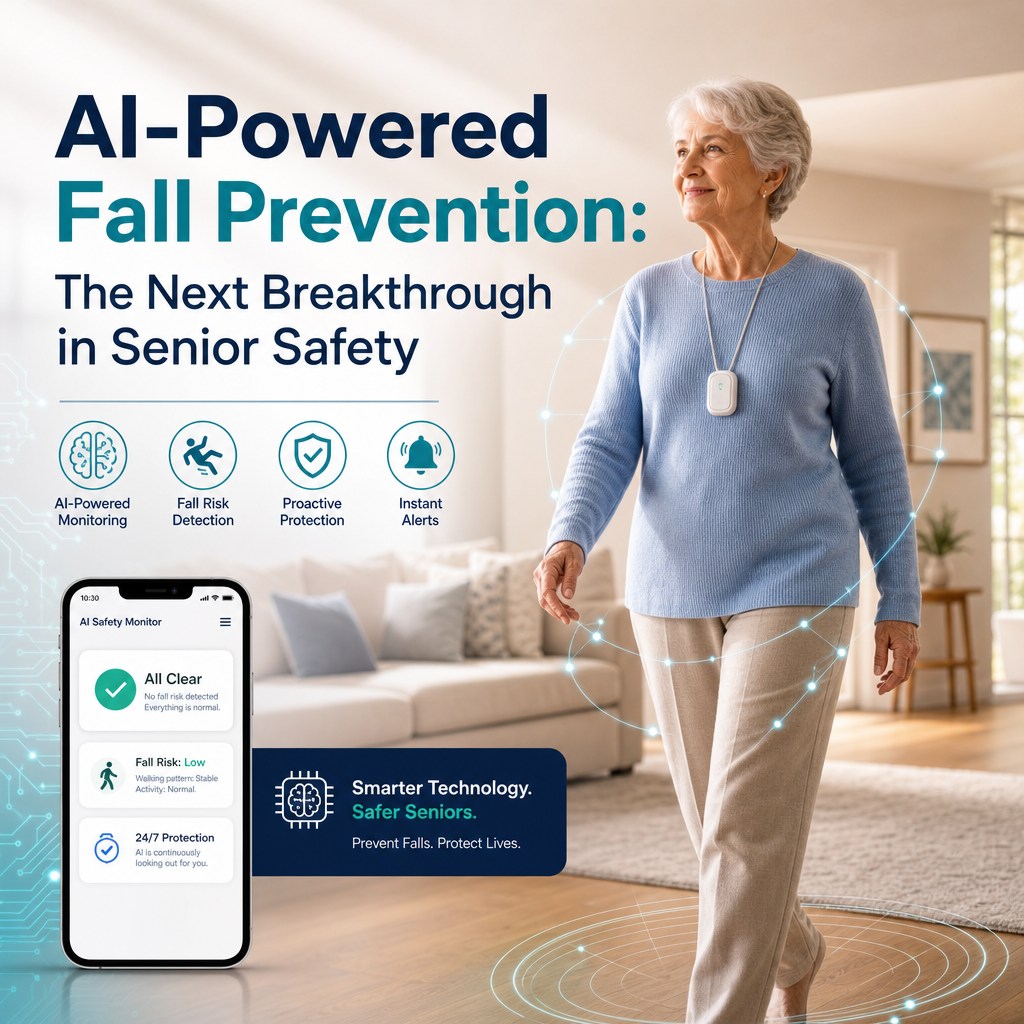
AI-Powered Fall Prevention: The Next Breakthrough in Senior Safety
AI-Powered Fall Prevention: The Next Breakthrough in Senior Safety
Falls are one of the biggest health risks older adults face. A single fall can lead to broken bones, hospital stays, loss of confidence, and a reduced ability to live independently. For families and caregivers, the fear of “what if” is constant.
That is why AI-powered fall prevention is quickly becoming one of the most important innovations in senior care. Instead of reacting after an accident happens, new systems can help identify risk, monitor movement patterns, and provide earlier warnings before a fall occurs.

Why Fall Prevention Matters More Than Ever
As people age, changes in balance, vision, strength, and reaction time can increase the risk of falling. Common causes include:

- Weak muscles or poor balance
- Medication side effects
- Cluttered living spaces
- Slippery floors or poor lighting
- Chronic conditions such as arthritis or Parkinson’s disease
Traditional fall prevention often relies on home modifications, mobility aids, and caregiver supervision. These are still essential, but they do not always catch subtle warning signs early enough. This is where AI can make a real difference.

What Is AI-Powered Fall Prevention?
AI-powered fall prevention uses smart technology to detect patterns that humans may miss. These tools often combine:
- Motion sensors
- Wearable devices
- Cameras with privacy-focused monitoring
- Pressure sensors in floors or beds
- Software that analyzes movement and behavior over time
The goal is not simply to detect a fall after it happens. The real breakthrough is prediction and prevention.

For example, an AI system may notice that a senior is walking more slowly, stumbling slightly more often, or getting out of bed unsteadily at night. These small changes can signal rising fall risk long before an emergency occurs.

How AI Helps Keep Seniors Safer
1. Identifying Risk Early
One of the strongest benefits of AI-powered fall prevention is early detection. By analyzing daily movement, AI can spot patterns linked to instability.
A person may not realize their gait has changed, and even loved ones may not notice gradual decline. AI can flag those trends and alert caregivers or healthcare providers, allowing action to be taken sooner.
2. Monitoring Without Constant Intrusion
Many seniors want to maintain privacy and independence. AI systems can support that goal by providing background monitoring without requiring someone to be physically present all the time.
Some devices use non-invasive sensors rather than recording traditional video. This can help older adults feel safer while still preserving dignity.
3. Sending Real-Time Alerts
If a dangerous event does occur, speed matters. AI-based systems can instantly alert:
- Family members
- Professional caregivers
- Nursing staff
- Emergency services
Fast response can reduce complications and provide peace of mind to everyone involved.
4. Supporting Personalized Care
Not every senior has the same risks. AI can learn individual routines and detect changes specific to one person rather than using a one-size-fits-all approach.
This means care plans can become more personalized. A doctor or caregiver may adjust medication timing, recommend physical therapy, or suggest changes in the home based on data collected over time.
Where This Technology Is Being Used
AI-powered fall prevention is already being introduced in a range of care settings, including:
At Home
For seniors aging in place, smart sensors and wearable devices can add an extra layer of protection without disrupting daily life.
Assisted Living Communities
Staff can use AI insights to identify residents who may need more support, helping prevent incidents before they happen.
Hospitals and Rehabilitation Centers
Patients recovering from surgery or illness often face temporary mobility issues. AI systems can help teams monitor recovery and reduce fall-related setbacks.
Benefits Beyond Physical Safety
The impact of AI-powered fall prevention goes beyond avoiding injuries. It can also improve emotional well-being.
When older adults feel safer, they may be more willing to move around, stay active, and continue daily routines. That confidence matters. Fear of falling can sometimes become as limiting as a fall itself.
Families also benefit. Constant worry can be exhausting, especially for adult children balancing work, caregiving, and distance. Knowing that smart technology is helping monitor risk can ease some of that stress.
Important Challenges to Consider
While the promise is exciting, AI is not a complete solution on its own. There are still important issues to address:
- Privacy: Seniors and families need clear information about what data is collected and how it is used.
- Accuracy: Systems must minimize false alarms while still catching real risk.
- Accessibility: Cost and ease of use will determine how widely these tools can help.
- Human oversight: Technology should support caregivers, not replace human judgment and compassion.
The best results come when AI is combined with practical safety measures, medical care, and personal support.
The Future of Senior Safety
The future of senior care is shifting from reactive to preventive. That change is powerful. Instead of waiting for a fall to cause harm, AI-powered fall prevention offers a smarter approach—one built on awareness, prediction, and faster response.
As the technology improves, we can expect systems that are more accurate, more affordable, and more tailored to individual needs. For seniors who want to remain independent and for families who want reassurance, this could be a major step forward.
Final Thoughts
AI-powered fall prevention is more than a trend. It represents a new way of thinking about senior safety—one that focuses on preventing injury, preserving independence, and improving quality of life.
Falls may never be eliminated entirely, but with the help of intelligent technology, they do not have to remain an unavoidable part of aging. That is what makes this innovation such an important breakthrough.
