
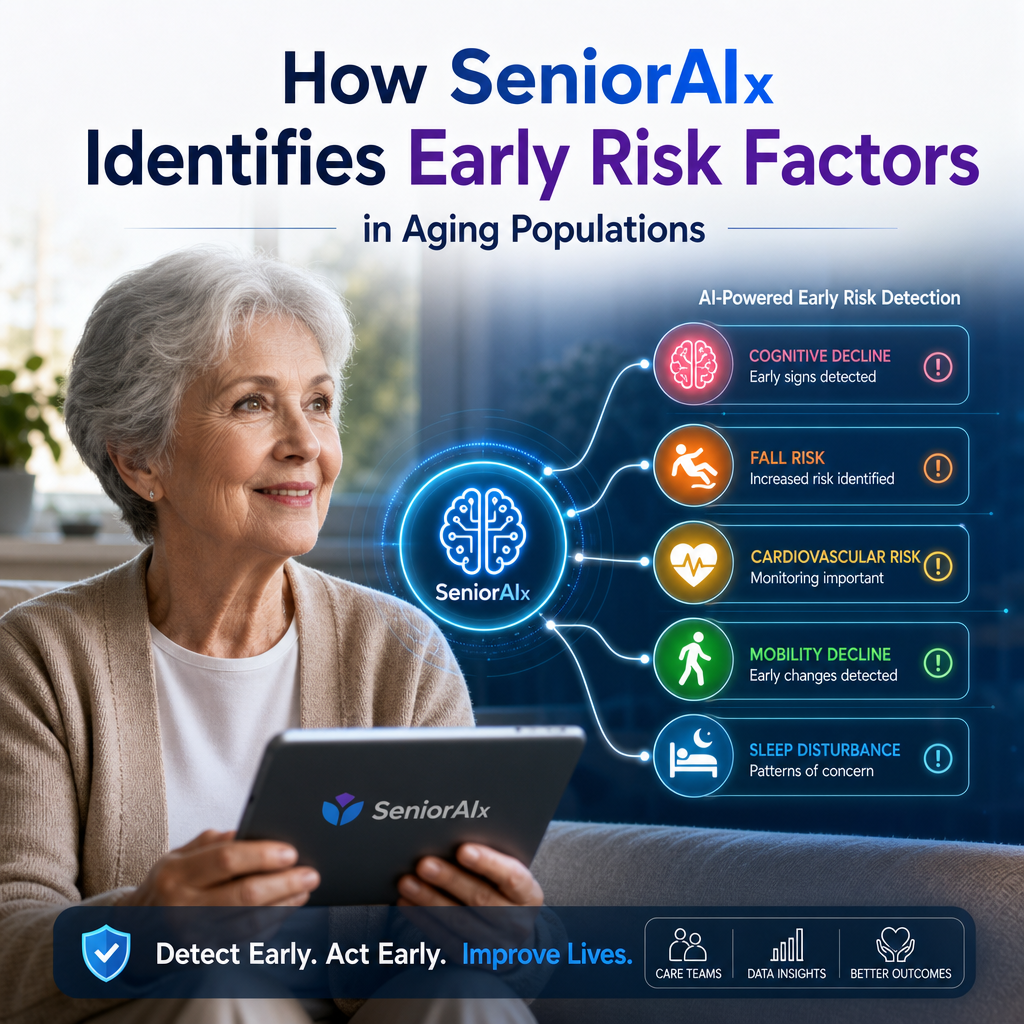
How SeniorAIx Identifies Early Risk Factors in Aging Populations
How SeniorAIx Helps Identify Early Risk Factors in Aging Populations Worldwide
As populations age across every region of the world, health systems are facing a growing challenge: how to detect problems before they become emergencies. Chronic illness, cognitive decline, falls, malnutrition, isolation, and medication complications often develop gradually. By the time symptoms are obvious, the impact on quality of life can be significant.
This is where SeniorAIx plays an important role. By using data-driven analysis and predictive intelligence, SeniorAIx helps identify early risk factors in aging populations worldwide, giving caregivers, healthcare providers, and families a better chance to act sooner.

Why Early Detection Matters in Older Adults
Aging does not affect everyone in the same way. Some people remain active and independent for many years, while others experience faster health decline due to genetics, environment, lifestyle, or access to care.

The challenge is that many risks begin with subtle warning signs, such as:

- Small changes in mobility
- Missed medications
- Poor sleep patterns
- Reduced appetite
- Social withdrawal
- Mild memory changes
- Increased hospital visits
Individually, these issues may seem minor. Together, they can point to larger concerns that need attention. Identifying these signs early can help prevent avoidable complications and support healthier aging.
What SeniorAIx Does
SeniorAIx is designed to analyze patterns connected to aging and wellness. Instead of waiting for a serious event, it helps detect risk trends sooner by reviewing health-related data in a structured way.

This may include signals related to:

- Physical function
- Cognitive changes
- Chronic disease progression
- Medication adherence
- Nutrition and hydration
- Fall risk
- Emotional well-being
- Social isolation
By connecting these data points, SeniorAIx can highlight where someone may need additional monitoring or support.
Turning Data Into Actionable Insights
One of the biggest strengths of SeniorAIx is its ability to transform complex information into practical insights.
Older adults often interact with multiple parts of the healthcare system, including primary care doctors, specialists, caregivers, home health services, and hospitals. Important warning signs can easily become fragmented across these settings.
SeniorAIx helps bring those signals together. It can identify patterns that humans may miss, especially when changes happen slowly over time. For example, a slight reduction in movement, combined with missed appointments and weight loss, may suggest a rising health risk even before a formal diagnosis is made.
This kind of early visibility supports proactive care rather than reactive treatment.
Supporting Global Aging Populations
The need for better risk detection is not limited to one country. Aging populations worldwide are increasing rapidly, and many regions are under pressure to deliver care with limited resources.
SeniorAIx can support this global challenge in several ways:
1. Scalable Monitoring
In areas where healthcare staff are stretched thin, SeniorAIx can help prioritize who may need attention first. This allows care teams to focus on higher-risk individuals without losing sight of the broader population.
2. More Consistent Assessments
Different providers may assess risk differently. SeniorAIx adds a more standardized layer of analysis, which can improve consistency across clinics, communities, and care settings.
3. Better Prevention Strategies
When risk factors are identified early, communities and healthcare organizations can invest in prevention instead of crisis response. This may reduce hospital admissions, emergency visits, and long-term care burdens.
4. Insights Across Diverse Populations
Because aging experiences vary by region, culture, and economic conditions, SeniorAIx can help uncover population-level patterns that inform better public health planning.
Key Early Risk Factors SeniorAIx Can Help Flag
SeniorAIx is especially valuable because many age-related problems overlap. Detecting one issue early can also reveal others that may soon follow.
Some common early risk factors include:
Mobility Decline
A slower walking speed, reduced balance, or lower daily activity can be early signs of frailty, fall risk, or worsening chronic conditions.
Cognitive Changes
Mild confusion, forgetfulness, or changes in routine can signal the beginning of cognitive impairment and create safety concerns if left unaddressed.
Medication Problems
Older adults often manage multiple prescriptions. SeniorAIx can help identify patterns that suggest missed doses, interactions, or complications related to treatment adherence.
Nutrition and Hydration Issues
Unintended weight loss, low appetite, or dehydration may indicate broader medical or functional concerns and can quickly lead to weakness and hospitalization.
Social Isolation
Loneliness and reduced social engagement are often overlooked, but they are linked to depression, cognitive decline, and poorer overall health outcomes.
Benefits for Caregivers and Health Systems
SeniorAIx does more than identify risk. It supports better decision-making across the care journey.
For caregivers and families, it can provide earlier awareness that a loved one may need help.
For clinicians, it can offer an additional layer of insight to guide assessments and care plans.
For health systems and policymakers, it can improve population health management by showing where resources are most urgently needed.
The result is a more preventive, personalized, and efficient approach to senior care.
A Smarter Future for Healthy Aging
As the world adapts to a growing older population, the ability to identify early risk factors in aging populations worldwide will become increasingly important. Healthcare systems cannot rely only on late-stage intervention if they want to improve outcomes and maintain quality of life for older adults.
SeniorAIx represents a smarter approach. By detecting subtle warning signs, connecting fragmented data, and supporting earlier action, it helps shift care from reaction to prevention.
In a world where aging is becoming one of the defining health challenges of our time, tools like SeniorAIx can make a meaningful difference—one insight, one intervention, and one older adult at a time.