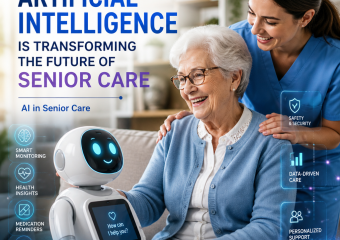

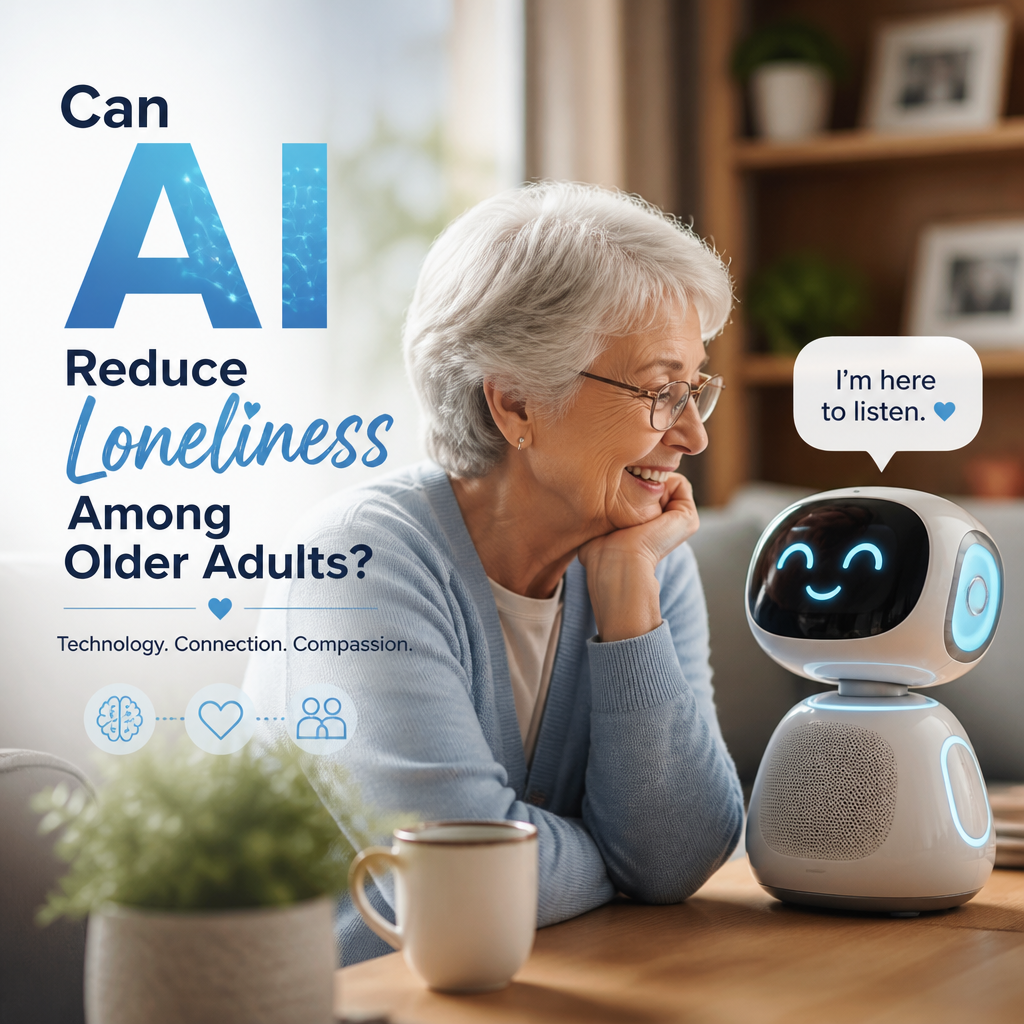
Can Artificial Intelligence Reduce Loneliness Among Older Adults?
Can Artificial Intelligence Reduce Loneliness Among Older Adults?
Loneliness can affect people at any age, but older adults may face particular challenges. Retirement, bereavement, health conditions, limited mobility, and living far from family can reduce opportunities for regular social contact. Artificial intelligence (AI) is increasingly being used in tools designed to offer conversation, reminders, and practical support. These tools may help ease loneliness—but they work best as a complement to human connection, not a replacement for it.
How AI Can Offer Everyday Companionship
AI-powered chatbots and voice assistants can respond to questions, hold simple conversations, tell stories, suggest activities, or help someone stay in touch with relatives. For an older adult who spends long stretches alone, a friendly interaction may provide a welcome sense of engagement.

Some systems can also support daily routines. They may remind users about appointments, medication schedules, or planned calls. When a person is hesitant to reach out, an assistant might help draft a message or make it easier to start a video call with family. These small prompts can turn technology into a bridge toward human interaction.

AI-enabled social robots are another option. Depending on their design, they may respond to speech, recognize familiar routines, or provide entertainment. For some people, the presence of a responsive device can make a room feel less quiet. However, people differ in whether they find such devices comforting, amusing, intrusive, or unappealing.

Potential Benefits for Older Adults
AI tools can be available at any hour, which may matter when someone wants to talk outside the times friends, relatives, or caregivers are free. Voice-based tools can also be easier to use than apps for people with limited vision or difficulty typing.
AI may help personalize activities, too. A system could suggest music, discussion topics, or hobbies based on a user’s interests. With appropriate safeguards, it may also help caregivers notice changes in routines—for example, if someone stops using a device or begins missing reminders. Such signals should prompt a thoughtful check-in, rather than be treated as a diagnosis.

For older adults who face barriers to leaving home, technology can make some forms of participation more accessible. A device might help them join a remote group, attend an online event, or connect with a community service. In these cases, AI can support connection by reducing practical obstacles.

What AI Cannot Replace
Conversation with a machine is not the same as a relationship with a person. AI can generate responsive language, but it does not experience empathy, shared history, or genuine care. A chatbot may offer a pleasant exchange, yet it cannot provide the full emotional support of a trusted friend, family member, neighbor, or professional.
There is also a risk that organizations could rely on AI as a low-cost substitute for human contact. That would be a mistake. Older adults should not be left to manage serious distress or isolation through an automated system alone. AI is most useful when it helps people connect with others—not when it becomes a reason to provide less human attention.
Privacy, Safety, and Accessibility Matter
Before using an AI product, it is important to understand what information it collects, where that information is stored, and who can access it. Conversations may include sensitive details about health, finances, or family life. Clear privacy settings and plain-language explanations can help users make informed choices.
AI tools can also misunderstand speech, provide inaccurate information, or respond in ways that feel inappropriate. Systems intended for older adults should be easy to operate, adaptable to hearing or vision needs, and designed to make it clear when a user is speaking with AI. A person should be able to stop, correct, or disable the system without difficulty.
Family members and caregivers can help by introducing a tool gradually and asking whether it is genuinely useful. The older adult’s preferences should guide the decision; not everyone wants a digital companion, and declining one should be respected.
Making AI Part of a Human Connection Plan
To use AI constructively, pair it with real-world support. A voice assistant might remind someone to call a friend, while a community organization could help arrange regular visits or group activities. A chatbot might encourage a person to discuss persistent sadness with a health professional, but it should not stand in for professional care.
The best measure of success is not how often someone talks to a device. It is whether the technology helps them feel more connected, supported, and able to take part in life. Artificial intelligence may reduce some moments of loneliness among older adults, but meaningful, lasting connection still depends on people showing up for one another.