

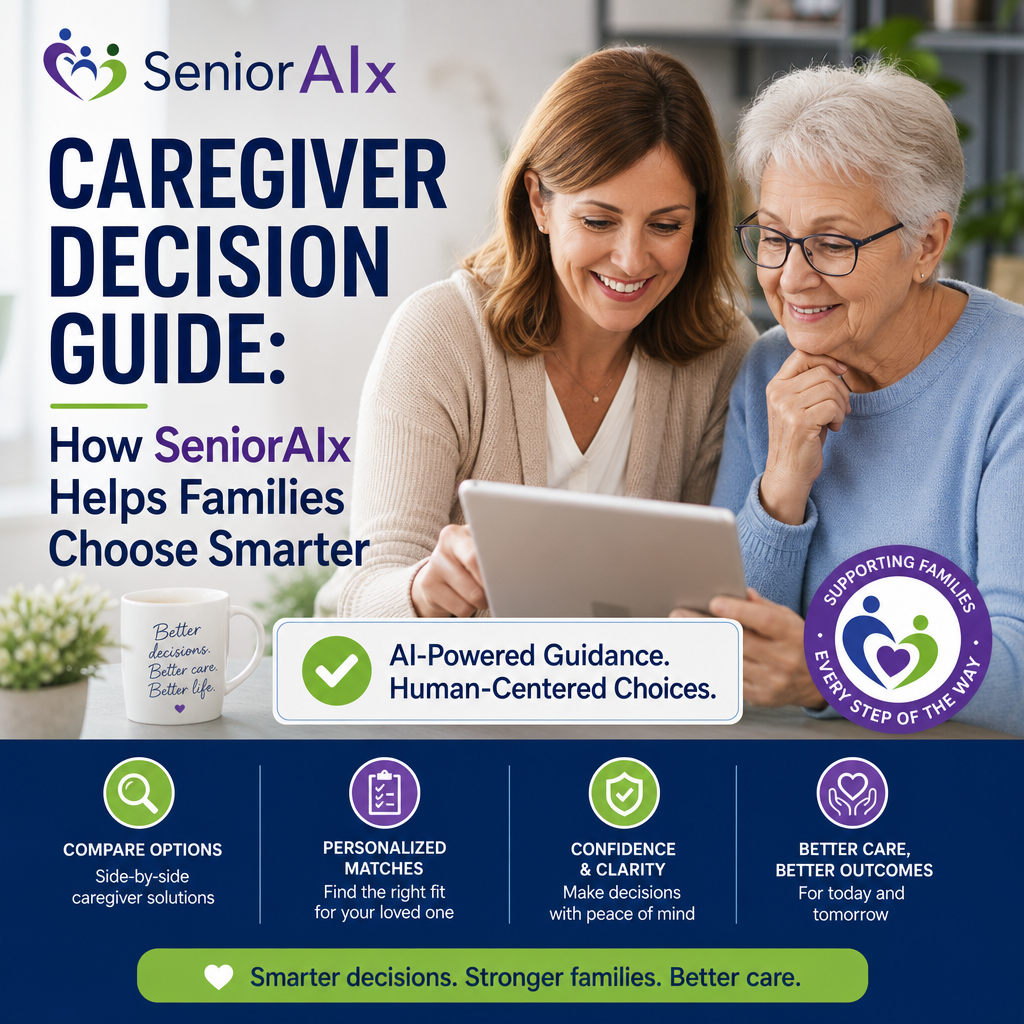
Caregiver Decision Guide: How SeniorAIx Helps Families Choose Smarter
The Ultimate Caregiver Decision Guide: How SeniorAIx Helps Families Make Smarter Choices
Caring for an aging parent or loved one often starts with small concerns: missed medications, trouble getting to appointments, or difficulty managing daily tasks. Over time, those concerns can grow into bigger questions about safety, independence, and long-term care.
That is where The Ultimate Caregiver Decision Guide becomes so important. Families need more than opinions or guesswork. They need a clear way to compare options, understand risks, and make decisions with confidence. SeniorAIx helps simplify that process by turning complex caregiving choices into practical, informed next steps.

Why Caregiver Decisions Feel So Overwhelming
Most families are not prepared for how quickly caregiving decisions can become emotional and complicated. A single choice often affects finances, health, daily routines, and family relationships all at once.

Common questions include:

- Is it safe for a loved one to live alone?
- When is home care enough?
- Should the family consider assisted living or memory care?
- How can everyone agree on the best next step?
- What support is actually affordable?
These are not easy questions, especially when siblings, spouses, and adult children have different views. Add stress, limited time, and medical uncertainty, and it becomes easy to feel stuck.
What Makes SeniorAIx Different
SeniorAIx is designed to support families during one of the most important decision-making periods of their lives. Instead of relying only on instinct, families can use structured insights to evaluate care needs and compare possible solutions.

At its core, SeniorAIx helps families:

Assess Care Needs More Clearly
It can be hard to tell the difference between normal aging and signs that more support is needed. SeniorAIx helps organize observations around mobility, memory, safety, medication management, and daily living tasks.
This makes it easier to spot patterns such as:
- Increasing forgetfulness
- Falls or balance issues
- Missed meals or poor nutrition
- Isolation or emotional decline
- Difficulty with bathing, dressing, or housekeeping
When families can see the full picture, they are better equipped to make decisions based on real needs rather than assumptions.
Compare Care Options Side by Side
One of the biggest challenges in caregiving is understanding what each level of care actually offers. SeniorAIx can help families evaluate the differences between:
- In-home care
- Adult day programs
- Assisted living
- Memory care
- Skilled nursing support
Rather than jumping to the most drastic option, families can review what level of care matches the current situation. This helps avoid both under-supporting and overreacting.
Bring More Structure to Family Conversations
Caregiving conversations can quickly become tense. One person may focus on cost, another on safety, and another on honoring a parent’s wishes. SeniorAIx creates a shared framework so discussions are based on needs, priorities, and realistic options.
That structure helps families move from:
- “I think Mom is fine”
- “No, she clearly needs help”
to more productive conversations like:
- “Here are the areas where support is needed”
- “Here are the safest and most affordable options”
- “Here is what we should revisit in the next 30 days”
Smarter Choices Start With Better Information
The real value of The Ultimate Caregiver Decision Guide is not just in making one decision. It is in helping families make a series of better decisions over time.
Care needs change. A parent who only needs a few hours of help each week today may need full-time support later. SeniorAIx helps families adjust their plans as conditions evolve, which can reduce crisis-driven decisions.
Better information can help families:
- Act earlier before emergencies happen
- Reduce conflict between family members
- Plan financially with more clarity
- Support a loved one’s independence longer
- Feel more confident in difficult moments
Signs It May Be Time to Use SeniorAIx
Many families wait until a hospital stay, fall, or medical scare forces them to act. But earlier planning leads to better outcomes.
Consider using SeniorAIx if you notice:
Changes in Daily Function
Small shifts in hygiene, eating habits, driving, or household management can signal a growing need for support.
Repeated Safety Concerns
Burned food on the stove, missed medications, wandering, or frequent falls are strong indicators that a care plan should be reviewed.
Family Disagreement
If relatives cannot agree on what is happening or what to do next, a more objective decision guide can be incredibly helpful.
Caregiver Burnout
When one family member is doing most of the work, exhaustion can cloud judgment. Better tools lead to better decisions for both the caregiver and the senior.
A More Compassionate Way to Plan Care
Good caregiving decisions are not just about logistics. They are about dignity, safety, and quality of life. Families want to protect loved ones without taking away independence too soon. That balance is hard to achieve without guidance.
SeniorAIx supports a more compassionate approach by helping families understand where support is truly needed and where independence can still be preserved. That kind of clarity can reduce guilt, second-guessing, and unnecessary conflict.
Final Thoughts
Every family wants to make the right choice for an aging loved one, but the path is rarely simple. The Ultimate Caregiver Decision Guide is about replacing confusion with clarity and fear with informed action.
SeniorAIx helps families make smarter choices by organizing care needs, comparing realistic options, and supporting better conversations. In a time that often feels uncertain, the right guidance can make all the difference.
When families have a clear decision framework, they are not just reacting to problems. They are planning with purpose, caring with confidence, and making choices that truly support the well-being of the people they love.