
How Agentic AI Transforms Senior Living in the U.S., Canada, Europe
How Agentic AI Is Transforming Senior Living Communities Across the U.S., Canada, and Europe
Senior living communities are under pressure to do more with less. Across the U.S., Canada, and Europe, operators are facing labor shortages, rising costs, stricter compliance demands, and growing expectations from residents and families. In this environment, agentic AI is emerging as a practical tool, not just a futuristic concept.
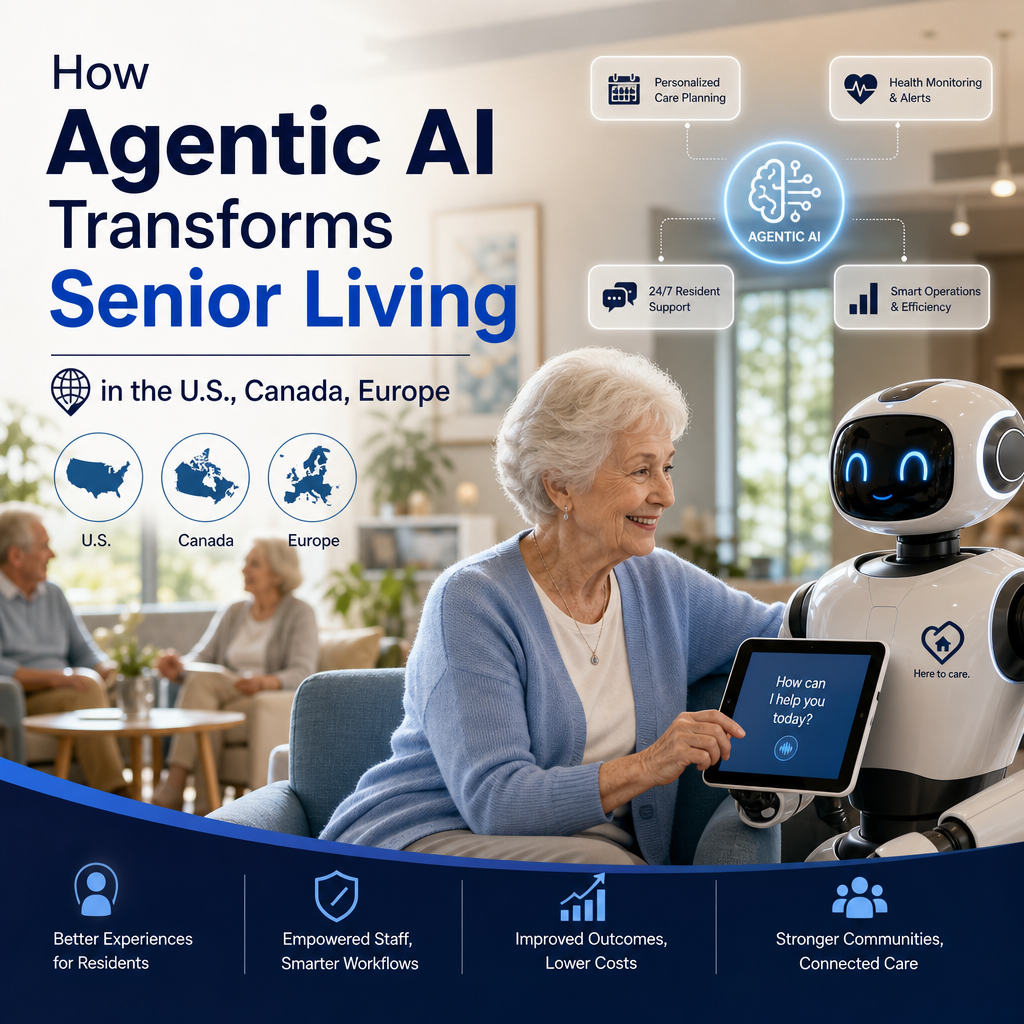
Unlike traditional software that waits for commands, agentic AI can make decisions, take action, and coordinate tasks across systems with limited human input. In senior living, that means it can help staff respond faster, personalize care, reduce administrative work, and improve daily operations.

What Makes Agentic AI Different?
Most digital tools in senior care support a single task, such as scheduling, charting, or sending reminders. Agentic AI goes further.

It can:

- Monitor multiple data sources at once
- Identify patterns or risks in real time
- Trigger actions automatically
- Communicate with staff, residents, or families
- Learn from outcomes to improve future decisions
This shift from “tool” to “active assistant” is what makes agentic AI so significant for senior living communities.
Improving Care Coordination
One of the biggest opportunities for agentic AI is care coordination. In many communities, staff spend too much time moving between systems, following up on missed steps, and documenting routine events.

Agentic AI can streamline this process by:

Detecting Early Warning Signs
If a resident shows subtle changes in sleep, mobility, appetite, or social engagement, agentic AI can flag the issue before it becomes a serious health event. This is especially valuable in memory care and assisted living settings, where small changes can signal larger problems.
Automating Follow-Up
Instead of simply generating an alert, agentic AI can assign the task to the right team member, schedule a check-in, and log the outcome. This reduces delays and helps ensure nothing falls through the cracks.
Supporting Personalized Care
Communities can use agentic AI to tailor routines, engagement plans, and wellness recommendations based on each resident’s history, preferences, and current condition.
Reducing Staff Burnout
Staff burnout remains a major challenge in senior living across North America and Europe. Care teams are often stretched thin, and much of their day is consumed by repetitive tasks rather than direct resident interaction.
Agentic AI can help by taking over time-consuming work such as:
- Appointment coordination
- Shift reminders
- Documentation support
- Family communication updates
- Inventory and supply tracking
This does not replace caregivers. Instead, it frees them to focus on empathy, observation, and relationship-building, the parts of care that matter most and cannot be automated in a meaningful human way.
Enhancing the Resident Experience
Residents and families increasingly expect senior living communities to deliver both quality care and convenience. Agentic AI can improve the experience in ways that feel seamless rather than intrusive.
For example, it can:
- Recommend activities based on personal interests
- Send medication or hydration reminders
- Help residents navigate services through voice assistants
- Notify families of important updates automatically
- Adjust room settings for comfort and safety
In independent living settings, this kind of support can help older adults maintain autonomy longer. In higher-acuity environments, it can provide another layer of responsiveness and reassurance.
Regional Momentum Across the U.S., Canada, and Europe
The adoption of agentic AI is not happening evenly, but momentum is growing across regions.
United States
In the U.S., senior living operators are exploring AI to address staffing gaps, occupancy pressure, and rising healthcare complexity. Larger providers are often leading the way, especially those already invested in electronic health records, remote monitoring, and integrated care platforms.
Canada
Canadian communities are showing interest in AI solutions that improve efficiency while supporting publicly accountable care standards. Bilingual communication, rural access challenges, and coordination across care settings create strong use cases for agentic systems.
Europe
In Europe, aging populations and workforce shortages are accelerating innovation. Countries with strong digital health infrastructure are particularly well positioned to deploy agentic AI in ways that align with privacy regulations, resident rights, and long-term care reform.
Key Challenges to Address
While the promise is real, agentic AI must be implemented thoughtfully.
Privacy and Data Governance
Senior living communities handle sensitive personal and health data. Any AI system must meet strict requirements for consent, security, and transparency.
Trust and Human Oversight
Staff and families need to understand how decisions are made. Agentic AI should support human judgment, not operate as a black box with no accountability.
Integration With Existing Systems
Many communities still rely on disconnected platforms. To deliver value, agentic AI needs access to clean, connected data across operations and care workflows.
What the Future Looks Like
Over time, agentic AI is likely to become part of the core infrastructure of senior living communities. It will not replace nurses, caregivers, or executive directors. But it will become a powerful layer of support, helping teams work smarter and respond more proactively.
The most successful organizations will be the ones that use agentic AI to strengthen human care, not distance themselves from it. In a sector built on trust, dignity, and daily connection, that balance will matter most.
Final Thoughts
Agentic AI is transforming senior living communities by making care more proactive, operations more efficient, and resident experiences more personalized. Across the U.S., Canada, and Europe, the technology is moving from experimentation to real-world application.
For providers willing to invest in the right systems, governance, and staff training, agentic AI offers more than automation. It offers a new model for supporting older adults with greater precision, responsiveness, and compassion.