
AI-Powered Senior Care: How Technology Is Transforming Aging at Home
AI-Powered Senior Care: How Technology Is Transforming Aging at Home
More older adults want to age in place — to stay safely and comfortably at home for as long as possible. AI-powered senior care uses artificial intelligence, sensors, and connected services to support seniors, family members, and professional caregivers. This article explains how these technologies work, practical examples, benefits and limitations, plus privacy and safety guidance so families can make informed choices.
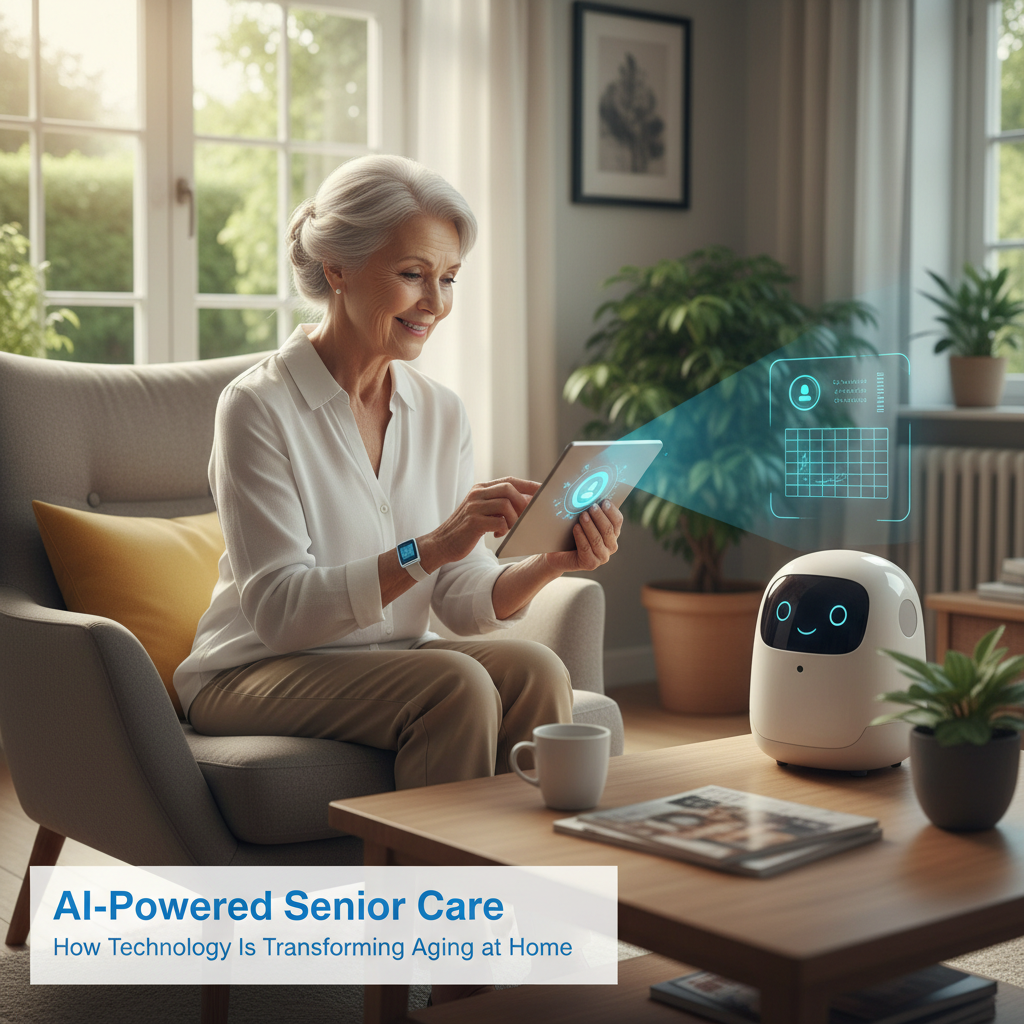
[IMAGE: A warm living room with smart sensors and a tablet showing a caregiver dashboard]

How AI supports older adults at home
AI adds context and pattern recognition to everyday devices. Rather than simply logging a door opening or a step on the floor, intelligent systems learn usual routines and flag deviations that may indicate a problem.

Health monitoring without constant clinic visits
Passive sensors and wearable devices combined with AI can monitor activity patterns, sleep, and basic vital signs. When paired with telehealth, clinicians can review trends remotely and prioritize visits when needed. This reduces unnecessary travel while keeping clinicians informed.

Medication reminders and adherence
Smart pillboxes and voice assistants deliver reminders, confirm doses (via sensors or cameras if consented), and notify caregivers if doses are missed. Timely prompts help reduce confusion and support independence.
Detecting falls and reducing risk
Fall-risk awareness combines motion sensors, floor vibration monitors, and AI models trained to detect unusual movement or rapid changes. Systems can call for help automatically or alert family and local responders. They can also identify environmental risk factors — such as poor lighting or clutter — and suggest practical changes.

Telehealth and personalized support
Video visits and remote monitoring make it easier to consult clinicians, adjust medications, and get therapy or counseling at home. AI can personalize prompts, adjust reminder cadence, and tailor content to cognitive or sensory needs so support fits the individual.

[IMAGE: Telehealth session on tablet with a smiling older adult and clinician on screen]
Social connection and wellbeing
Loneliness is a major concern for many older adults. AI-driven conversational agents, activity suggestions, and community-matching tools help maintain social ties. Simple features — shared photo streams, scheduled calls, or hobby groups suggested by an algorithm — can keep engagement high without replacing human contact.
Helping families and caregivers coordinate care
Care coordination platforms collect activity summaries, medication logs, and appointment reminders in one place. Practical dashboards let multiple caregivers split tasks, log visits, and see alerts. Simple ID systems — for example labeling devices or rooms with short codes like 431, 432, 382, 199, and 337 — make it easier for family members and paid caregivers to reference items quickly.
Realistic example
- A smart home system notices reduced mobility during the morning routine. An AI flags the change, sends a summary to a family member and the primary caregiver, and schedules a telehealth check. The clinician and family determine whether a home visit or therapy adjustment is needed.
Emergency awareness and response
AI systems can escalate care when certain thresholds are met: a detected fall with no subsequent movement, repeated missed medications, or sudden changes in vitals. Most vendors configure alerts to go first to trusted contacts and then to emergency services if there’s no response. It’s critical to confirm local emergency routing and how contacts will be notified.
Benefits, limitations, and realistic expectations
Benefits include improved situational awareness, fewer unnecessary clinic visits, and better coordination among caregivers. Limitations include the risk of false positives or missed events, dependence on reliable internet and power, upfront cost, and varying levels of tech comfort among users.
AI assists decision-making but should not replace trained clinicians. Families should use AI as a tool that augments — not substitutes — human judgment.
Privacy, safety, and responsible AI
When evaluating products consider:
- Data minimization: devices should collect only what’s necessary.
- Encryption and secure storage for transmitted and stored data.
- Clear consent processes that seniors can understand and modify.
- Human oversight: a clinician or caregiver should be in the loop for important decisions.
- Vendor transparency about algorithms, updates, and how alerts are generated.
Responsible AI practices include testing for bias, using diverse datasets, and offering explanations for why an alert was triggered. Ask vendors about third-party audits, compliance with health data laws, and how they handle firmware updates and device retirement.
Choosing a system and getting started
Start by identifying priorities: medication management, fall detection, social connection, or remote clinician access. Pilot a system with one room or one set of features before scaling. Involve the older adult in decisions and trial the interface together.
There are companies and platforms specializing in senior care technologies — for example, SeniorAIx integrates monitoring, caregiver coordination, and telehealth features; more about them is at https://senioraix.com.
Summary and next steps
AI-powered senior care is expanding options for aging at home by improving monitoring, supporting medication routines, enhancing telehealth, and strengthening social and caregiver connections. While powerful, these tools work best with clear human oversight, strong privacy protections, and realistic expectations about capabilities and limits.
Call to action: if you’re considering AI for a loved one, start with a small pilot, review privacy and emergency plans, and involve clinicians and the senior in every decision. Reach out to a trusted provider or clinician to discuss options that match needs and values.