
Why AI-Driven Senior Care Platforms Are the Future of Aging
The Future of Aging: Why AI-Driven Senior Care Platforms Are Becoming the Global Standard
The world is getting older, and fast. In nearly every region, people are living longer while birth rates decline. That shift is creating new pressure on families, healthcare systems, and care providers to support aging populations with dignity, safety, and efficiency.
This is where AI-driven senior care platforms are changing the conversation. What once seemed like a niche healthcare technology is now becoming a practical global solution. From remote monitoring to predictive health insights, these platforms are helping redefine what aging well looks like in the 21st century.

Why Traditional Senior Care Models Are Under Pressure
For decades, senior care has relied heavily on in-person support, paper-based records, and reactive medical care. While those methods still matter, they are no longer enough on their own.

Several major challenges are driving the need for change:

- Growing elderly populations
- Shortages of caregivers and nurses
- Rising healthcare costs
- Increased rates of chronic illness
- Greater demand for independent living
Families want their loved ones to stay safe without losing freedom. Care providers need tools that reduce workload while improving outcomes. Governments are also looking for scalable systems that can support millions of older adults without overwhelming public health budgets.
That is exactly why AI-driven senior care platforms are gaining momentum worldwide.

What AI-Driven Senior Care Platforms Actually Do
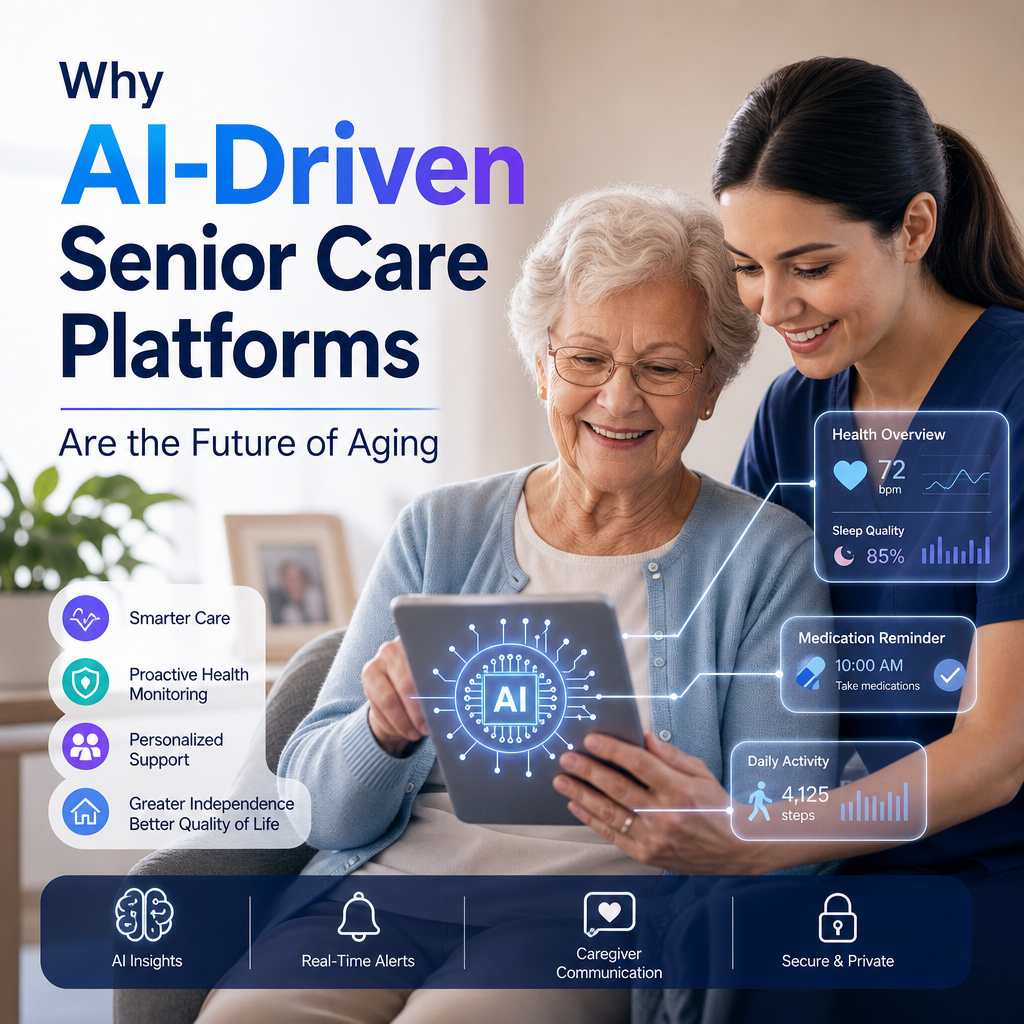
At their core, these platforms combine artificial intelligence, health data, connected devices, and communication tools into one care ecosystem. Their purpose is simple: monitor health, identify risks earlier, and make care more proactive.

Common Features Include
- Remote vital sign monitoring
- Fall detection and emergency alerts
- Medication reminders
- Behavior and mobility tracking
- AI-based risk prediction
- Telehealth integration
- Family and caregiver dashboards
Instead of waiting for a crisis, these systems can spot warning signs early. A change in sleep patterns, walking speed, appetite, or heart rate may indicate a developing problem. AI can flag those subtle patterns before they turn into hospital visits.
That shift from reactive care to preventive care is one of the biggest reasons these platforms are becoming the global standard.
The Push for Aging in Place
Most older adults do not want to move into institutional care unless it becomes absolutely necessary. They prefer to remain in their own homes, surrounded by familiar routines, communities, and memories.
AI-driven senior care platforms make that choice more realistic.
By using sensors, smart wearables, and intelligent alerts, caregivers can keep an eye on seniors without constant physical presence. This supports independence while still offering a strong safety net. Families gain peace of mind, and seniors keep greater control over their daily lives.
For many countries, aging in place is not just a personal preference. It is an economic necessity. Home-based support is often more affordable than long-term residential care, especially when technology helps prevent avoidable emergencies.
How AI Improves Care Quality
One of the biggest strengths of AI is its ability to find patterns humans might miss. In senior care, that can lead to faster interventions and more personalized support.
Key Benefits of AI in Senior Care
Earlier Detection of Health Issues
AI can analyze data over time and identify warning signs linked to falls, dehydration, cognitive decline, or worsening chronic conditions.
Better Use of Caregiver Time
Automation reduces repetitive tasks such as scheduling, reminders, documentation, and routine follow-up. That allows caregivers to focus more on human interaction.
Personalized Care Plans
Not every senior has the same needs. AI helps tailor care recommendations based on habits, medical history, and real-time changes in health.
Stronger Family Communication
Many platforms allow family members to receive updates, alerts, and care summaries. This improves transparency and reduces anxiety.
In other words, the technology does not replace care. It makes care smarter, faster, and more connected.
Why Adoption Is Becoming Global
The rise of AI-driven senior care platforms is not limited to one country or healthcare system. It is happening globally because the underlying problems are universal.
Countries in North America, Europe, and parts of Asia are already investing heavily in digital health infrastructure. At the same time, emerging markets are exploring mobile-first and remote-care models that can reach underserved populations.
Several forces are accelerating adoption:
- Wider access to smartphones and connected devices
- Expansion of telehealth services
- Better internet connectivity
- Advances in AI and cloud computing
- Increased acceptance of digital healthcare after the pandemic
As these technologies become more affordable and reliable, they are moving from optional innovation to expected standard practice.
The Human Side Still Matters
Technology alone is not enough to create good senior care. Trust, empathy, and ethical use of data remain essential.
AI-driven senior care platforms work best when they support, not replace, human relationships. Seniors need to feel respected, not watched. Caregivers need tools that empower them, not systems that add stress. Families need reassurance that privacy and consent are being handled responsibly.
The future of aging should be both high-tech and deeply human.
Looking Ahead
The global standard for senior care is shifting toward systems that are preventive, personalized, and connected. AI-driven senior care platforms fit that future because they address the biggest challenges facing aging societies: scale, cost, safety, and quality of life.
As populations continue to age, the question is no longer whether these platforms will play a major role. It is how quickly healthcare systems, providers, and families will adopt them.
The future of aging is not just about living longer. It is about living better, with the right support at the right time. AI is helping make that possible.