
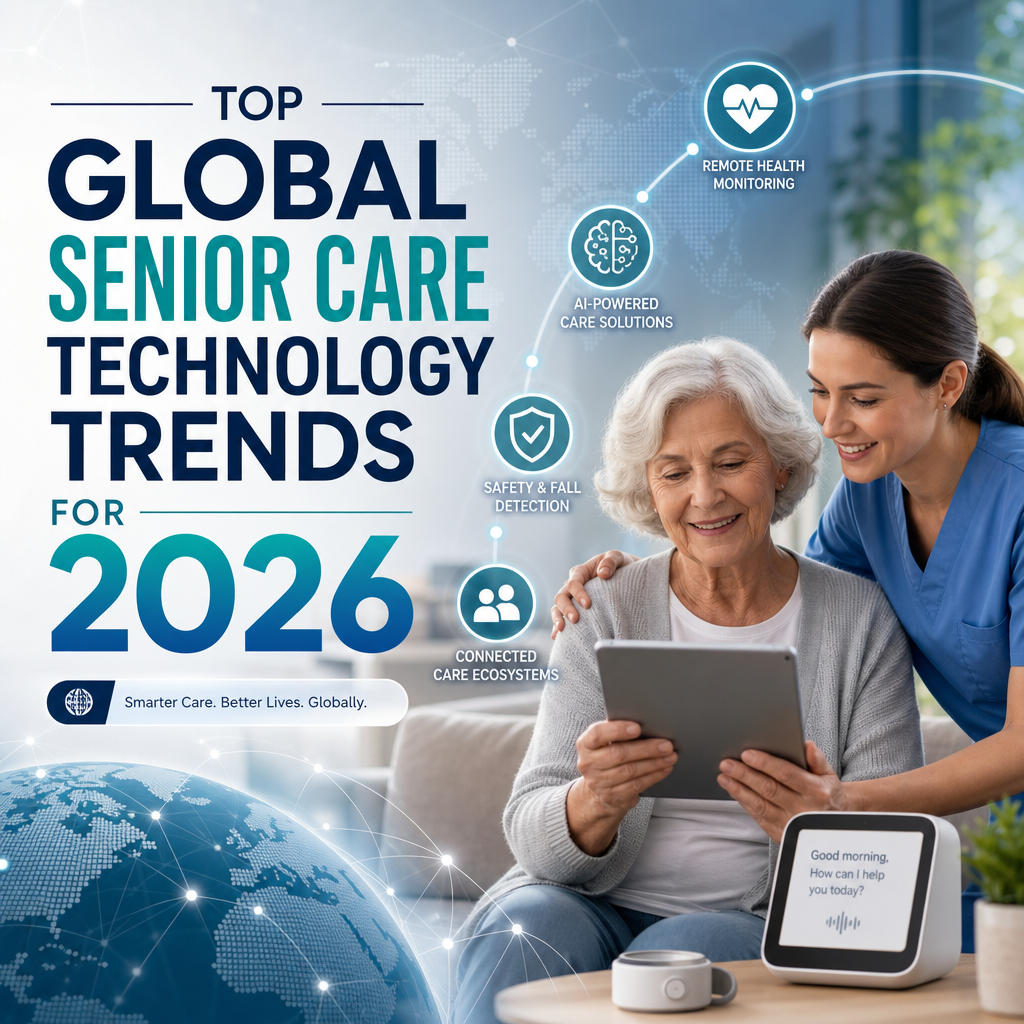
Top Global Senior Care Technology Trends for 2026
Top Global Trends in Senior Care Technology for 2026 — Insights from SeniorAIx
The future of aging is being shaped by innovation at a remarkable pace. Across healthcare systems, private homes, and senior living communities, senior care technology is moving from a helpful extra to an essential part of modern care delivery. According to emerging insights from SeniorAIx, 2026 will be a defining year for tools that support safety, independence, and better outcomes for older adults.
What makes this shift so important is not just the technology itself, but how it responds to real-world challenges: caregiver shortages, rising healthcare costs, and the growing preference for aging in place. Here are the top global trends expected to define senior care technology in 2026.

AI-Powered Predictive Care Becomes Mainstream
One of the biggest trends is the rise of predictive care powered by artificial intelligence. Rather than reacting to emergencies after they happen, care providers are increasingly using AI to identify risk patterns early.

SeniorAIx highlights how advanced systems can now analyze:

- Changes in mobility
- Sleep disruptions
- Medication adherence
- Vital sign trends
- Behavioral shifts linked to cognitive decline
This means a fall risk, dehydration issue, or worsening chronic condition can often be flagged before it becomes serious. In 2026, predictive analytics will play a larger role in both home-based care and institutional settings, helping caregivers intervene earlier and more effectively.
Remote Monitoring Moves Beyond Basic Alerts
Remote monitoring is no longer limited to emergency pendants or simple check-in devices. The next generation of senior care technology includes smarter, less intrusive systems that continuously assess wellbeing.

What’s changing in remote care?
New platforms combine wearable devices, ambient sensors, and cloud-based dashboards to give families and care teams a broader view of daily health. These systems can detect subtle changes, such as:

- Reduced movement around the home
- Missed meals
- Irregular bathroom use
- Changes in room temperature or air quality
SeniorAIx points to a global shift toward “passive monitoring,” where support happens in the background without interrupting everyday life. This is especially valuable for seniors who want independence without feeling constantly supervised.
Smart Homes Are Becoming Care Environments
The smart home market is increasingly overlapping with elder care. In 2026, homes will do more than provide comfort and convenience—they will actively support safety and daily living.
Voice assistants, automated lighting, fall-detection flooring, medication reminders, and connected kitchen appliances are all becoming part of the senior care ecosystem. For older adults living alone, these tools can reduce risk while making routines easier to manage.
SeniorAIx suggests that the most successful smart home solutions will be the ones designed with simplicity in mind. Easy interfaces, clear voice prompts, and seamless integration matter more than flashy features. Technology adoption among seniors improves when systems feel intuitive rather than overwhelming.
Digital Companionship Gains Importance
Loneliness remains a major issue in aging populations worldwide, and technology is increasingly being used to address the emotional side of care. One notable trend for 2026 is the growth of digital companionship tools.
These include:
- Conversational AI assistants
- Social engagement apps
- Robotic companions
- Cognitive games personalized to user needs
While these tools are not a replacement for human connection, they can help reduce isolation, encourage routines, and provide mental stimulation. SeniorAIx notes that demand is especially strong in regions where staffing shortages limit one-on-one interaction.
As conversational AI becomes more natural and responsive, digital companions may become a meaningful support layer in senior wellbeing strategies.
Interoperability Takes Center Stage
A major barrier in senior care technology has been fragmentation. Devices often collect useful data, but the information stays trapped in separate systems. In 2026, interoperability is expected to become a much bigger priority.
Healthcare providers, home care companies, and senior living operators want technology that can connect across platforms. That means:
- Monitoring systems linking with electronic health records
- Medication data syncing with caregiver dashboards
- Family apps integrating with provider communication tools
SeniorAIx identifies interoperability as one of the most important enablers of scalable care. When data flows smoothly, decision-making improves, duplication decreases, and the care experience becomes more coordinated for everyone involved.
Workforce Support Tools Expand Rapidly
Technology for seniors is only part of the story. Another major trend is the rise of tools designed to support caregivers and care staff directly.
In many markets, labor shortages are putting pressure on care systems. As a result, organizations are investing in platforms that reduce administrative work and make teams more efficient. These include:
- AI-assisted documentation
- Automated care planning
- Staff scheduling optimization
- Real-time communication tools
- Training platforms using simulations or microlearning
SeniorAIx emphasizes that better caregiver support leads to better resident and patient outcomes. In 2026, the most valuable technology may be the kind that helps human caregivers spend less time on paperwork and more time on meaningful care.
Ethics, Privacy, and Trust Will Shape Adoption
As senior care technology becomes more advanced, trust will be a deciding factor in adoption. Older adults and their families want reassurance that technology is safe, respectful, and transparent.
This makes ethical design essential. Companies will need to show clear policies around:
- Data privacy
- Informed consent
- Bias in AI systems
- Transparency in alerts and recommendations
SeniorAIx predicts that organizations with strong privacy standards and user-centered design will stand out in a crowded global market. In senior care, trust is not a bonus feature—it is the foundation of long-term success.
The Road Ahead for 2026
The global future of senior care is increasingly digital, but the goal is deeply human: helping older adults live safer, healthier, and more connected lives. From predictive analytics and smarter homes to caregiver support and digital companionship, the next wave of innovation is focused on practical impact.
The key lesson from SeniorAIx is clear: the best senior care technology in 2026 will not simply add more devices. It will create better experiences, stronger coordination, and more personalized support across the entire care journey.
For providers, families, and innovators alike, this is the moment to pay attention. The trends shaping 2026 are already setting a new standard for aging well around the world.