
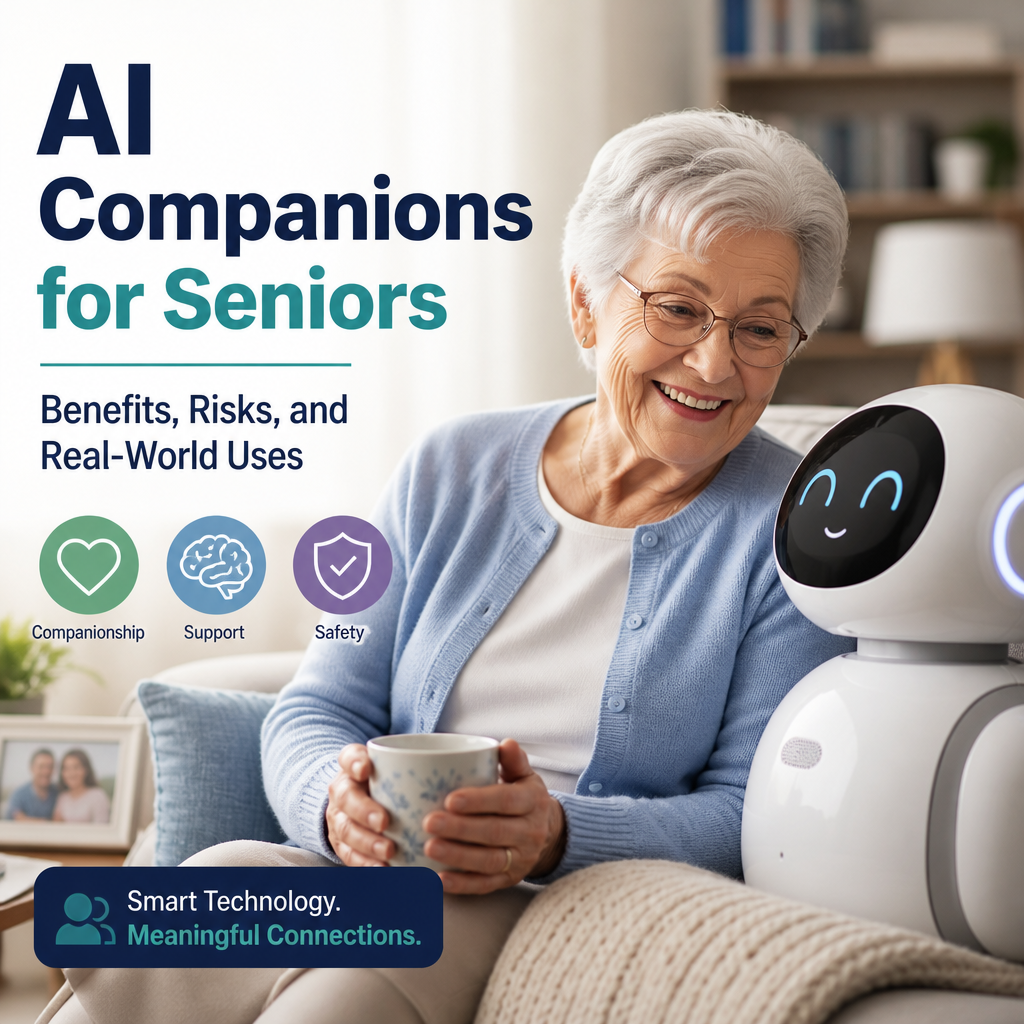
AI Companions for Seniors: Benefits, Risks, and Real-World Uses
AI Companions for Seniors: Benefits, Risks, and Real-World Applications
A friendly voice that answers questions, reminds someone to take medication, or helps them make a video call may offer meaningful support in later life. AI companions for seniors range from voice assistants and conversational apps to social robots designed to interact with people at home or in care settings.
These tools are not substitutes for family, friends, or professional caregivers. Used thoughtfully, however, they can make everyday tasks easier and help older adults feel more connected and independent.

What Are AI Companions?
An AI companion is a digital tool that responds to spoken or written requests and may adapt to a person’s preferences over time. Some operate through a smartphone or smart speaker; others are embodied in a tabletop or mobile robot.

Depending on the product, a companion may:

- Answer general questions or support casual conversation
- Set reminders for appointments, meals, or medication
- Play music, read the news, or guide simple activities
- Help users contact family members or care staff
- Offer prompts to move, drink water, or follow a daily routine
Capabilities vary, and not every device is designed for health care. A product that can set a reminder, for example, should not be assumed to monitor health or respond reliably to an emergency.
Potential Benefits for Older Adults
Companionship and engagement
Living alone or having limited mobility can reduce opportunities for conversation. An AI companion can provide an easy way to talk, share a joke, or take part in a word game. While this interaction is different from human friendship, it may add variety to the day, particularly when regular social contact is difficult.

Some systems also encourage activities such as recalling memories, listening to favorite songs, or practicing a language. These features can support engagement, though they should not be presented as proven treatments for loneliness or cognitive decline.

Greater independence
Voice-controlled tools can make routine tasks more accessible. A person with limited dexterity or vision may find it easier to ask a device to turn on a light, call a relative, or read a calendar aloud than to navigate a small screen.
Reminders can also support everyday routines. For instance, a companion might prompt someone about an upcoming appointment or help them remember to prepare for a scheduled visit. These supports work best when they fit naturally into the person’s habits.
Support for caregivers
With appropriate permission, some systems can help caregivers coordinate schedules or receive alerts when a user requests assistance. This may ease communication between family members and care teams. It can also help caregivers focus their time on personal interaction rather than repeated logistical tasks.
Risks and Limitations
AI companions can misunderstand speech, give inaccurate information, or fail to recognize that a situation is urgent. They should not be relied on for diagnosis, medication decisions, or emergency response unless a specific service has been professionally assessed and is designed for that purpose.
Privacy is another important concern. Devices may collect voice recordings, usage patterns, or other personal information. Before choosing one, users and caregivers should review what data is collected, where it is stored, how long it is kept, and whether it can be deleted. Microphone controls and clear privacy settings are especially valuable.
There is also a risk of overreliance. A device should complement human contact, not become a reason to reduce visits or calls. Some older adults may also find a conversational system confusing, frustrating, or intrusive. Others may simply prefer not to use one—and that choice should be respected.
Real-World Applications
At home, a voice assistant might announce calendar events, play a familiar radio station, or make calling a family member simpler. In assisted-living communities, a social robot may lead group activities, offer music, or help residents access information about the day’s schedule.
Care teams may use digital companions as one part of a broader support plan, such as providing routine prompts between in-person check-ins. Any monitoring or alert feature should be discussed openly with the older adult and tested before it is relied upon. A human should remain responsible for responding to important concerns.
Choosing and Introducing a Companion
Start with a specific need rather than choosing the most advanced device. Consider whether the person wants help with reminders, communication, entertainment, or accessibility. Then assess ease of use, language options, sound quality, cost, data practices, and the availability of technical support.
A gradual introduction often works best. Set up the device together, demonstrate a few useful tasks, and let the person decide which features to keep. Revisit the arrangement if it becomes inconvenient or uncomfortable.
AI companions for seniors can offer practical assistance and moments of connection, but their value depends on a good fit. The most successful use combines useful technology with privacy safeguards, realistic expectations, and continuing human care.